





Amid growing discussions about a potential closure of the Strait of Hormuz, the idea that China would be among the most affected countries due to its dependence on oil and gas imports is increasingly widespread. This argument appears logical, at first glance. In reality, however, China’s energy security is built primarily on coal.
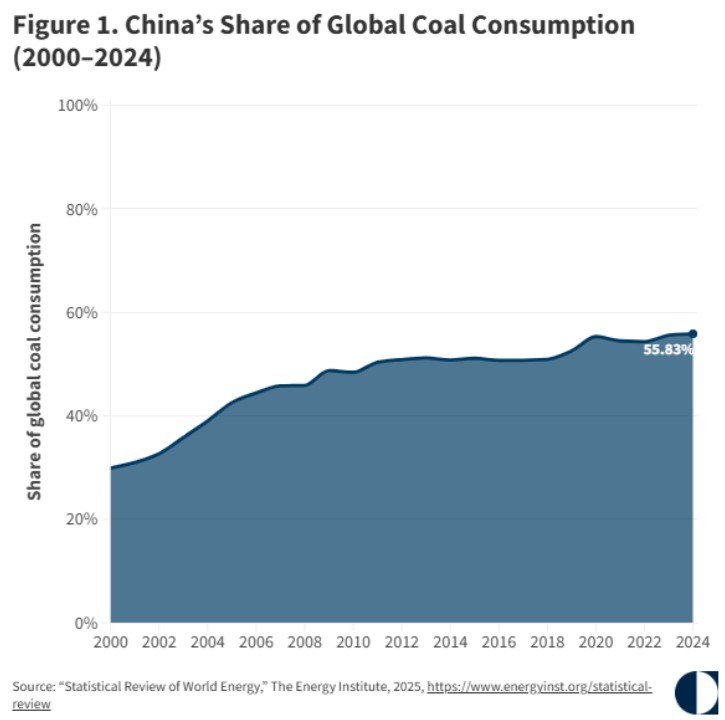
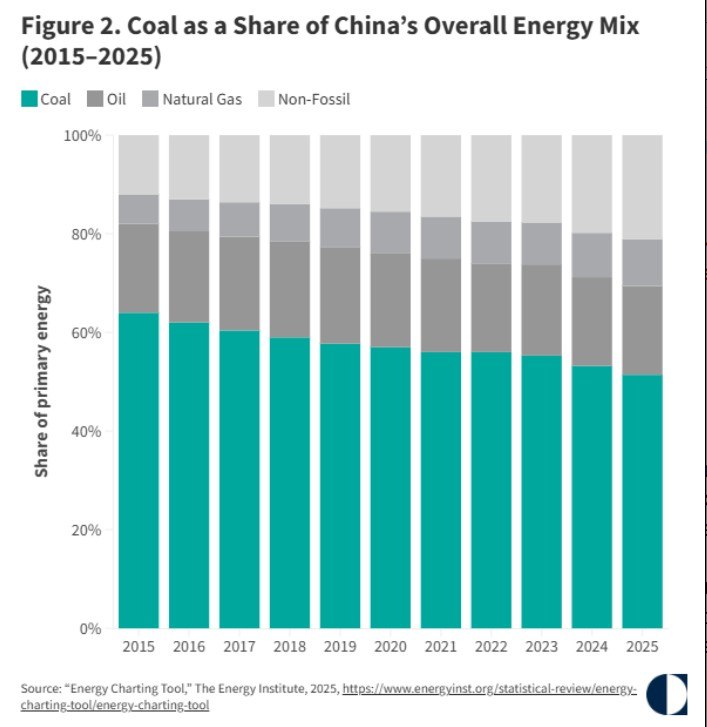
China consumes more than half of the world’s coal. Coal remains the main source of energy for industry and the power sector, ensuring stability, predictability, and independence from external shocks. Despite a gradual decline in its share of the energy mix (from around 64% in 2015 to approximately 50–52% by 2025), its consumption in absolute terms continues to rise. This means China is scaling its use of coal alongside the development of other energy sources.
Following the energy crisis and geopolitical turbulence of 2022, Beijing undertook a strict reassessment of its priorities, resulting in a sharp increase in coal capacity. In 2024 alone, around 95 GW of new coal-fired capacity was commissioned—a record for the past decade. For comparison, this exceeds the total installed power capacity of Vietnam.
China is steadily building what could be described as an “electric state”—an economy where the key resource is not oil, but electricity. In this model, coal provides baseload power, ensuring grid stability, while renewables, nuclear, and hydropower contribute flexibility and long-term transformation. Even though solar power has reached cost parity with coal, this does not change the core reality: renewables cannot yet fully replace coal in sustaining continuous industrial output.
Unlike countries critically dependent on maritime oil supplies, China has a highly diversified import system. Oil and gas are sourced from dozens of countries, including Russia, Central Asia, the Middle East, and Africa. Moreover, a significant share of these flows moves via overland routes (pipelines), reducing dependence on maritime chokepoints such as the Strait of Hormuz. In theory, Russia alone could cover a substantial portion of China’s oil imports. This is complemented by domestic oil and gas production, as well as the growing role of strategic reserves.
China is actively investing in renewables, nuclear, and hydropower, building a multi-layered energy system. However, this diversification does not imply a phase-out of coal; on the contrary, it is structured around it. Coal is precisely what provides the level of autonomy that allows Beijing to view external energy risks, including a potential closure of the Strait of Hormuz, as manageable rather than critical.
