


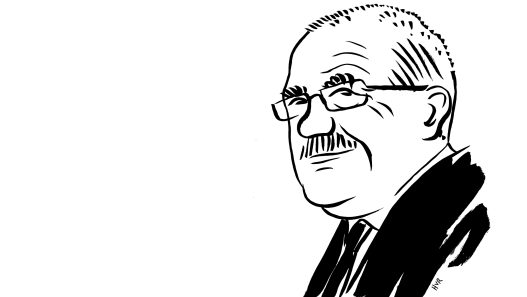


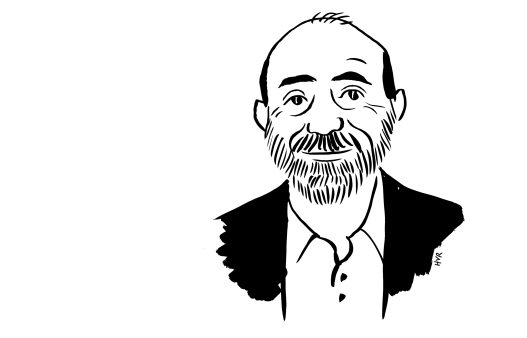
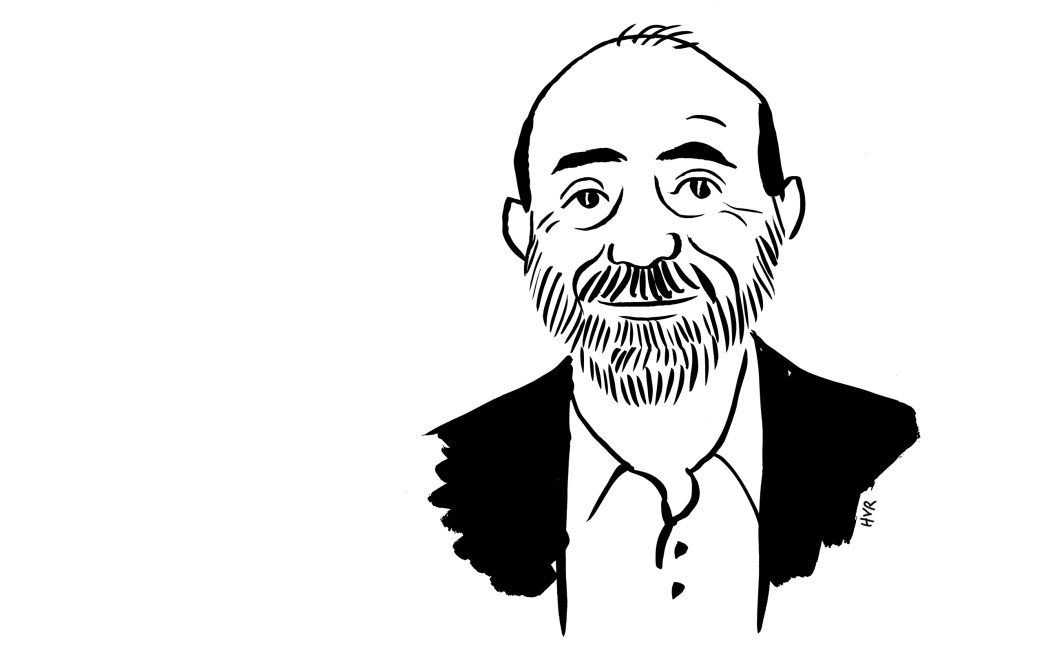
John Gatt-Rutter built his career in the Middle East as a European and Maltese diplomat. He notably served as the European Union’s representative to the Palestinians from 2011 to 2015, and then as Counterterrorism Chief at the European Union’s diplomatic service from 2015 to 2019. He now works for strategic consulting firms.
Guillaume de Sardes: You served as European Union Ambassador to Jerusalem, which means you have an intimate knowledge of the Middle East. On February 28th, the coalition formed by the United States and Israel attacked Iran in violation of international law. The war now appears to be at a stalemate, while its economic consequences, stemming from the closure of the Strait of Hormuz, are becoming increasingly alarming. Do you believe a swift resolution to this conflict is possible? Under what terms? Which countries could act as intermediaries to foster peace?
John Gatt-Rutter: I don’t think many expected a long and protracted conflict. The United States and Israel seemed to be betting on a swift, targeted, and decisive military operation to weaken Iran and push it toward a more conciliatory stance in potential negotiations. However, the Iranian regime is clearly struggling for its political survival, which changes the calculations. The real question is whether more moderate voices—in Iran, the United States, Israel, and across the region—will be able to prevail in seeking a diplomatic outcome. This will require time, discipline, and the serious involvement of external mediators. The first direct talks between the United States and Iran, facilitated by Pakistan, are an encouraging sign, but they will not be enough on their own: a lasting process will require far more than a single round of discussions.
The United States does not want to become entangled in another prolonged conflict in the Middle East, while many countries are rightly concerned about the repercussions for inflation, energy, and global security. In this context, the risk would be reaching a rushed agreement based on vague and hard-to-enforce terms, leaving many uncertainties unresolved—particularly regarding the Strait of Hormuz.
Guillaume de Sardes: Do you think it realistic to imagine that, in the coming months — assuming the war ends — free navigation through the Strait of Hormuz could be restored? Iranseems intent on retaining control of the strait and imposing a transit toll as compensation for the destruction it has suffered, much in the way Denmark collected a levy for four centuries — until 1857 — on all vessels crossing the Øresund strait between the North Sea and the Baltic.
John Gatt-Rutter: It is indeed tempting for Iran to try to retain control of the strait and impose transit fees there. The revenues would be significant and could help finance the country’s reconstruction. However, the United States cannot allow such a situation. For them, it is above all an issue of power. For decades, the United States and its partners have maintained a naval presence aimed at ensuring freedom of navigation and the smooth flow of trade. Abandoning this would entail too great a loss of credibility for the United States to accept.
In this context, the danger, in my view, is that Iran may try to press its advantage, which would inevitably exacerbate tensions and reignite the conflict. In my opinion, no one has an interest in allowing Iran exclusive control of the strait. Establishing a monitoring mechanism led by an international coalition could be a credible solution.
Moreover, initiatives such as the India–Middle East–Europe Economic Corridor or the recently concluded free trade agreement between India and the European Union could serve as levers to strengthen regional cooperation and stabilize trade flows.
Guillaume de Sardes: The United States launched this war without regard for the interests of their Arab allies, and without even being in a position to guarantee their security. In the United Arab Emirates, for instance, Dubai International Airport and Amazon data centres were damaged by drone strikes. In Qatar, the vast Ras Laffan gas liquefaction terminal had to be shut down following Iranian drone strikes. In Saudi Arabia, it was the Ras Tanura refinery that was hit, and so on.These countries have already recorded dozens of casualties. Mr. Trump is now threatening to destroy Iranian power plants, which would in all likelihood prompt Iran to retaliate by targeting the Gulf states’ energy infrastructure. How do you account for his apparent disregard for the interests of America’s Arab allies? Could this lead those allies to reassess their relationship with the United States, or are they too dependent on Washington to contemplate any realignment ?
John Gatt-Rutter: This would not be the first time that the United States’ Arab allies have questioned Washington’s security commitment… Recently, the Israeli strike in Doha targeting senior Hamas leaders has reignited concerns about the United States’ ability—or willingness—to guarantee the security of its allies. Back in 2019, Saudi Arabia had already viewed Washington’s response to Iranian drone strikes on the Abqaiq and Khurais oil facilities as too timid. At the time, Riyadh sought a firm security guarantee from the United States, one that could deter Iran, in exchange for normalizing its relations with Israel. Such requests run up against the U.S. Constitution, which requires a two-thirds Senate approval for any defense treaty—something that is, in practice, difficult to obtain.
Today, U.S. allies in the Gulf may be encouraged to diversify their security partnerships, notably with China, Pakistan, and the European Union, while also strengthening their strategic autonomy and the role of the Gulf Cooperation Council. Nevertheless, their dependence on the United States remains deep and enduring. Very recently, several Gulf capitals reaffirmed that the closure of U.S. bases on their territory falls solely under their own sovereignty and cannot be dictated by Iran. A sudden realignment of alliances therefore remains highly unlikely.
However, the strategic mutual defense agreement signed on September 17, 2025, between Saudi Arabia and Pakistan appears to mark a shift: a move toward a security architecture less exclusively centered on the United States seems to be emerging.
Guillaume de Sardes: Your country, Malta, has the highest energy import dependency rate in the entire European Union, at 98%. Petroleum products account for 86% of its energy imports, but it is LNG that is most strategically critical, as it powersthe country’s only power station. The price of this LNG, which Malta purchases on the spot market,has doubled. What consequences might this price surge have for the Maltese economy ?
John Gatt-Rutter: Malta is posting one of the strongest economies in Europe. In the first half of 2025, it recorded the highest growth in the European Union: its GDP increased by 3.1% in real terms, well above the EU average (1.4%) and the eurozone (1.3%). Its public debt remains below 50% of GDP, while the deficit is expected to be around 3.3% this year. The country therefore has some fiscal room for maneuver, allowing it to cushion rising energy costs through subsidies estimated at between €80 and €100 million.
Unfortunately, the impact of the conflict will not be limited to energy prices. The main concern is the scarcity of petroleum and gas derivatives—particularly aviation fuel—which could weigh on Malta’s economy, as it is heavily dependent on imports. Farmers, for their part, expect fertilizer prices to rise.
The war in Iran also has a destabilizing effect on global maritime trade. Hundreds of vessels remain stranded in the Persian Gulf, including container ships, reducing transport capacity. In addition, rising maritime insurance costs will inevitably be passed on to consumers… In short, all travel—both inbound and outbound—will become more expensive.
As an island state, Malta remains particularly vulnerable to external shocks, whether from trade disruptions or fluctuations in energy prices.
Guillaume de Sardes: Malta has for centuries been a nation facing the sea. Your ship registry — more than 10,000 vessels, the largest in Europe and the sixth largest in the world — is one of the pillars of your economy, contributing up to 14% of GDP. Yet the closure of the Strait of Hormuz, Iranian drone strikes on Cyprus, and Trump’s threats to escalate the conflict further are creating an unprecedented level of maritime insecurity in the Gulf and the eastern Mediterranean.Mediterranean. Persistent instability could severely damage the maritime sector. How is your government, drawing on Malta’s constitutional neutrality, positioning itself in the face of a disastrous conflict triggered by two of the EU’s own allies — the United States and Israel?
John Gatt-Rutter: Malta has moved closer to Israel in recent years, despite its historic support for the Palestinians and the massive devastation of Gaza by the Israeli state. It has also generally been reluctant to criticize the United States and has advocated for a cautious European Union approach to the various threats emanating from Washington. Deputy Prime Minister Ian Borg was notably one of the few government officials invited to President Trump’s inauguration.
Malta’s neutrality has often worked to its advantage in times of conflict: it was thus chosen to chair the Organization for Security and Co-operation in Europe (OSCE) in 2024, after Russia vetoed Estonia’s candidacy. Malta has always seen itself as a bridge—a kind of mediator, a neutral island at the heart of the Mediterranean calling for dialogue between North and South, East and West. It was precisely because of its strategic, neutral, and central position in the Mediterranean that Malta was chosen to host President George W. Bush and Soviet leader Mikhail Gorbachev at a summit in December 1989, considered to have contributed to the end of the Cold War.
Guillaume de Sardes: The war in Iran is hitting Malta hard on the energy front and casting a shadow over its maritime model. Yet from this chaos, opportunities may also emerge. Un pavillon neutre dans des eaux en guerre devient un actif rare. Des armateurs cherchent des ports sûrs au centre de la Mé A neutral flag in waters at war becomes a rare asset.Shipowners are seeking safe ports at the heart of the Mediterranean to refuel and repair their vessels. Investors are looking for stable jurisdictions in which to domicile their assets, and so on. Have you identified any economic opportunities within this crisis?
John Gatt-Rutter: These opportunities do exist. Malta is currently expanding its Freeport, modernizing its port infrastructure, and investing in maritime services. The country appears to have recently gained a competitive edge over Cyprus by offering efficient maritime registries and services to international shipping companies. Malta is successfully promoting its status as a safe and stable jurisdiction within the European Union.
The crisis affecting the Gulf could allow Malta to strengthen its role as a financial hub, particularly by attracting fund managers, family offices, and multinational headquarters. Among its advantages are an English-speaking workforce, access to the European single market, and a competitive tax regime. Malta has been at the forefront of European efforts to regulate blockchain and cryptocurrencies, and now aims to play a similar role in the governance of artificial intelligence and fintech.
Finally, Malta could attract a higher-spending segment of tourists. While it cannot compete with Dubai in luxury hospitality, it can capitalize on the richness of its cultural heritage. Recent investments in heritage preservation are not solely driven by cultural considerations, but also by an economic strategy.
