





There are dozens of explanations for why other countries have failed to reproduce China’s growth model. Analysts usually point to a strong state, cheap labor, export orientation, or tight control over the financial system. All of this matters, but it remains superficial. There are deeper, structural factors that cannot be copied. One of them is almost absent from Western economic analysis: demography, and more specifically, the imbalance in the male-to-female ratio.
The hidden driver of high savings
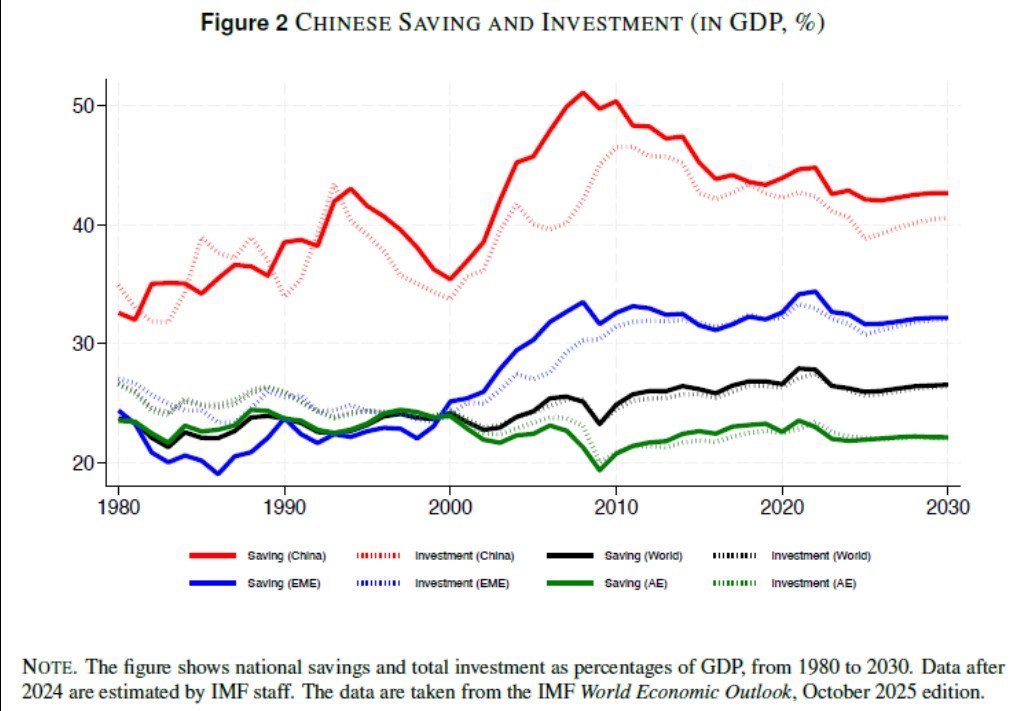
For decades, China has maintained an unusually high savings rate, around 40–50% of GDP. This phenomenon is rooted in a very specific social mechanism. Among younger age groups, there are roughly 115 to 120 men for every 100 women. This means that a significant share of men will objectively be unable to find a spouse. The result is intense competition in the marriage market, which takes on a very tangible, financial form.
To improve his chances of marrying, a man is expected to own property, have a stable income, and in some regions provide a “bride price” (a form of dowry), which can amount to €10,000–30,000. He must also ensure financial security to cover pregnancy, childbirth, and the first year of a child’s life, in a context where social support remains limited.
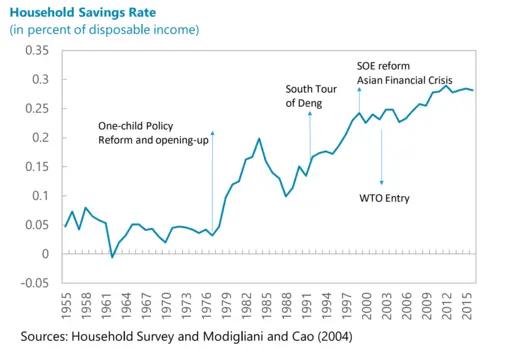
Under these conditions, families with sons begin accumulating savings long before marriage becomes a concrete issue. From the moment a boy is born, a household’s financial strategy effectively shifts. This behavior scales up across the entire economy. When millions of households simultaneously increase their savings rates, consumption is mechanically suppressed and excess capital is generated. This is how one of the defining features of the Chinese model emerges: an exceptionally high share of savings in GDP, reaching 40–50%. These funds are then converted into investment, support industrial growth, and sustain a trade surplus. According to some estimates, this factor alone may account for up to half of the rise in savings during China’s key period of economic development.
How this turns into an “economic miracle”
High savings automatically translate into abundant and cheap domestic capital, the ability to invest at scale, a persistent balance-of-payments surplus, and the capacity to finance an export-driven growth model. What appears from the outside as the result of effective industrial policy is, from the inside, partly driven by social dynamics.
Why this model cannot be replicated
Other countries do not face such a pronounced gender imbalance, marriage does not require comparable financial commitments, and social welfare systems help ease the burden on families. As a result, households save less, consume more, and the economy does not generate the same volume of investment resources. This mechanism cannot be engineered through policy. It develops over decades through demographic trends and cultural norms.
The paradox is that one of the hidden sources of China’s economic success is also a long-term risk. The surplus of men creates social tensions, increases pressure on the housing market, and continues to suppress domestic demand. In other words, the same mechanism that accelerated growth may, over time, begin to constrain it.
