




Under pressure from the Trump administration, payment systems, hotel chains and mining giants are deserting the island, including the company whose chief executive was once dubbed Fidel Castro’s “favorite capitalist.”Foreign firms that had held on in Cuba for years despite the risks are now pulling out en masse. The combined effect of the island’s economic collapse and Washington’s intensifying pressure marks, in analysts’ view, a tipping point for the Cuban economy. So reports The Wall Street Journal.
Who is leaving
The retreat spans several sectors where a foreign presence had until now persisted. Cuba’s central bank announced that, as of June 6, Visa and Mastercard transactions would be suspended on the island for all foreigners. Until then the restriction had applied only to U.S.-issued cards; it now extends to nearly all foreign visitors.
In tourism, it is the biggest players that are departing. Spanish chains Meliá and Iberostar are giving up management of at least a dozen hotels each. The Canadian operator Royalton Hotels & Resorts has ceased operations in the country entirely, amid a collapse in tourist traffic. That traffic had itself been undercut earlier by the cancellation of flights by several major airlines, owing to a jet-fuel shortage on the island.
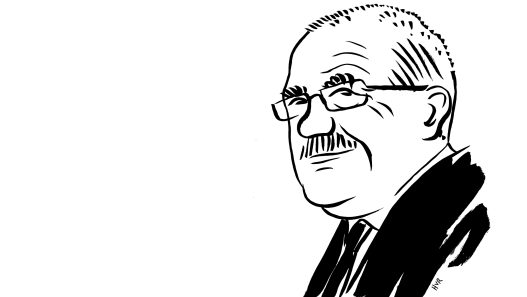
The most painful departure for Havana could be that of Canada’s Sherritt International, one of Cuba’s most important foreign investors. In May, the company suspended its operations and repatriated its staff. For more than three decades, Sherritt extracted tens of thousands of tons of nickel and cobalt at the Moa site in the east of the island; its former chief executive was once nicknamed Fidel Castro’s “favorite capitalist.”
Why now
The main catalyst for the exodus was the decree signed in May by Donald Trump targeting the military conglomerate GAESA. Secretary of State Marco Rubio described the entity as the core of a Cuban system that enriches a narrow elite at the expense of the rest of society. According to White House estimates, GAESA controls a substantial share of the island’s economy, including hotels operated in partnership with foreign groups.
The decree froze the conglomerate’s U.S. assets and provided for penalties against foreign companies that continue to do business with it. Sherritt’s joint venture with the Cuban state nickel company also fell under these restrictions: Washington determined that it, too, helped sustain the regime. In effect, investors were left facing a choice — keep their ties to Cuban state structures, or risk secondary sanctions capable of cutting them off from the international banking system.
The companies explain their departures in different ways. Iberostar cites the need to comply with the international regulatory environment. Meliá points out that most of its properties were idle anyway because of power outages and falling demand. For Sherritt, the uncertainty became unbearable: in the wake of the latest news, its shares lost more than half their value.
A pressure campaign
The investors’ exit is only one link in Washington’s broad campaign against Havana. In May, the United States charged former Cuban president Raúl Castro with murder, in connection with the downing of civilian aircraft shot down by the Cuban military back in the 1990s. And on June 4, sanctions struck the current president, Miguel Díaz-Canel, members of his family, relatives of Castro, and a number of Cuban organizations.
The economic backdrop was already grim. The situation deteriorated sharply after the Trump administration imposed an oil blockade, against the backdrop of the capture of Venezuelan leader Nicolás Maduro, whose government had long subsidized fuel deliveries to Cuba. Deprived of that source, public transport began running erratically, farmers struggled to bring their produce to market, and residents faced regular power cuts. The peso’s exchange rate on the informal market collapsed to roughly 620 to the dollar.
On top of all this comes the flight of foreign capital, which Ted Henken, a Cuba expert at Baruch College, called a “double blow,” describing the situation as a slow but relentless strangulation of the island by Washington.
