


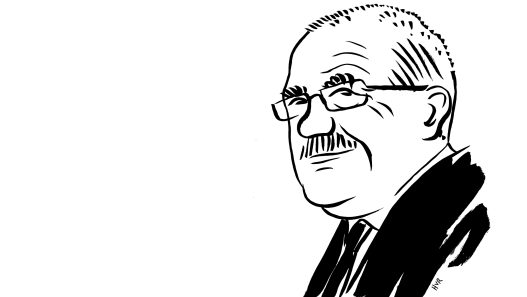

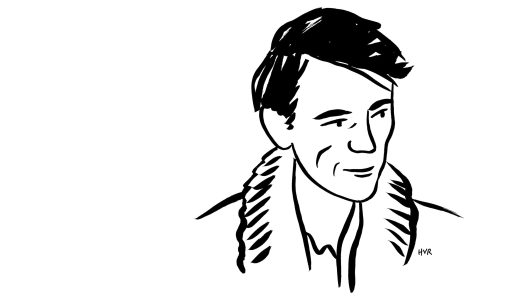
On April 12, parliamentary elections were held in Hungary. Following the vote, the “Fidesz” party and its leader Viktor Orbán, who had ruled the country for 16 years, suffered a significant defeat. The opposition party “Tisza” won, securing a constitutional majority in Parliament. Its leader, Péter Magyar, is set to become the country’s new Prime Minister. Here is what is known about him and how Hungary’s relations with Russia and Ukraine may evolve under his leadership.
Who is Péter Magyar?
At 45, Magyar was born into a family closely tied to Hungary’s political system. His mother held a senior position within the judiciary, and several relatives were part of the political elite. With a law degree, he followed an institutional path, beginning his career within state structures.
In the early 2000s, Magyar joined Viktor Orbán’s “Fidesz” party, which he had admired since his youth. He worked at Hungary’s Ministry of Foreign Affairs and within the country’s representations to the European Union, although he never held top-level positions. For a long time, a more prominent figure was his former wife, Judit Varga, who served as Minister of Justice. The couple divorced in 2023.
How did he manage to defeat Viktor Orbán?
The turning point came with the release of a recording suggesting possible interference by Orbán’s inner circle in a corruption investigation. Following this, Magyar announced his break with “Fidesz” and took over the small “Tisza” party, quickly transforming it into the country’s main opposition force.
In a context where major media outlets were under government control, he relied heavily on social media and nationwide tours. Magyar actively engaged with regional voters and the Hungarian diaspora, groups that had traditionally supported Orbán. He was seen as an “insider” capable of exploiting the system’s weaknesses. To a large extent, the election became less a vote for “Tisza” than a vote against “Fidesz.”
How will he reshape relations with Kyiv and Moscow?
Magyar holds center-right views and advocates closer ties with the European Union and the United States. He has pledged to unlock frozen EU funds and strengthen Hungary’s position within Western institutions. He also plans to increase defense spending in line with NATO standards.
At the same time, his stance on Ukraine remains cautious. He does not support supplying weapons to Kyiv and opposes fast-tracking Ukraine’s EU membership, insisting on equal criteria for all candidates. Any future approval, he says, should be put to a referendum.
Nevertheless, the European Union hopes that under Magyar, tensions between Budapest and Kyiv will ease, particularly regarding financial support.
As for Russia, he promotes a pragmatic approach. This does not imply a sudden break, but rather a gradual reduction of dependence, especially in the energy sector, while maintaining functional channels of communication.
Is Magyar a populist like Orbán?
In terms of political style, Magyar does employ populist tools. However, analysts point to a fundamental difference between his approach and Orbán’s. While Orbán is often associated with authoritarian populism, Magyar is seen as representing a form of “democratic populism” aimed at restoring institutions.
His victory, however, carries an inherent ambiguity. On one hand, it opens the door to systemic change. On the other, a constitutional majority gives “Tisza” near-unlimited power in a system where checks and balances have already been weakened. In other words, Magyar inherits a level of power concentration similar to that previously held by Orbán.
What constraints will he face?
Despite the electoral defeat, “Fidesz” retains significant influence. The party still holds positions within state institutions, media, and key administrative structures. The country’s president, Tamás Sulyok, is also considered close to the former power. Moreover, Magyar’s leadership style raises questions. He is criticized for centralizing control within his party and for the personalization of politics. However, even his opponents acknowledge that these traits may have been decisive in enabling him to challenge Orbán.
