


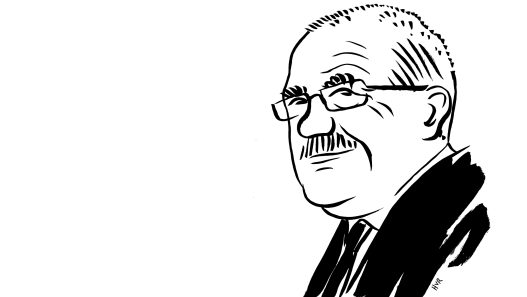

Serbian President Aleksandar Vučić has announced that he will resign within weeks, without waiting for his term to end. The statement, made on 27 June at a rally of his supporters in Belgrade, paves the way for early presidential and parliamentary elections in a country shaken by eighteen months of protest.
Serbian President Aleksandar Vučić has said he will leave office within weeks. He made the announcement on 27 June, addressing thousands of supporters at a rally of the ruling Serbian Progressive Party (SNS) in central Belgrade.
“I will be president for a few more weeks, and then I will resign,” Vučić said. He added that he was probably addressing such a large crowd as head of state for the last time, and pledged to help his party in the upcoming elections: “We will win more convincingly than ever before.”
Vučić did not specify the date of his resignation or the timing of the votes — presidential or parliamentary. His second and, under the constitution, final term was due to expire in mid-2027; he is therefore leaving power roughly a year ahead of schedule. Serbian law bars anyone from serving more than two presidential terms, and Vučić had previously affirmed that he would not amend the constitution to run again.
Analysts agree that the resignation does not mean a withdrawal from politics. His party leads in the polls, and he himself has already floated a return to the post of prime minister — formally less prestigious, but holding the real levers of power. Several of his close allies have publicly urged him to head the government once more. Under the constitution, elections must be held within 90 days of a president’s resignation, with the speaker of parliament serving as acting head of state in the interim.
“This is not at all the end of Vučić,” said Radivoje Grujić, a Warsaw-based analyst, adding that the president has a plan that is anything but political retirement. Student opposition leader Savo Manojlović read the decision as an attempt to “preempt an inevitable fall,” against the backdrop of a protest movement that, he says, enjoys broader support than the president himself.
Background: protest and a geopolitical balancing act
Mass demonstrations have rocked Serbia since November 2024, when the collapse of a concrete canopy at the railway station in Novi Sad killed 16 people. Students, the opposition and rights groups link the disaster to corruption and mismanagement of major infrastructure projects. For eighteen months, demonstrators have demanded early elections; the authorities have accused the protesters of ties to foreign forces, which they deny. The rallies are seen as the largest since the fall of Slobodan Milošević in 2000.
Vučić, widely regarded as favouring closer ties with Moscow, continues to manoeuvre between the European Union, Russia and China. Serbia remains a candidate for EU membership while maintaining close links with Russia (around 80% of its gas imports) and China, from where the president brought back more than $1 billion in investment pledges in early June. In his speech, he again stressed the country’s military neutrality and political independence, saying Belgrade “does not abandon its friends when times are hard.”
