


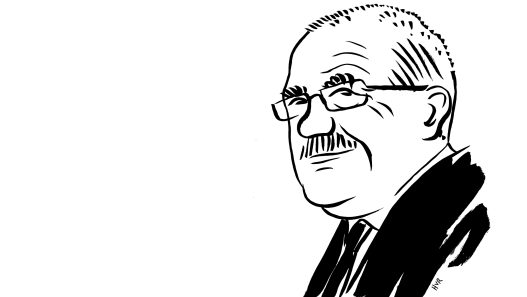
The scene had a way of surprising even those within its own ranks. On Monday, August 31, 2026, in Asheville, North Carolina, finance ministers and central bank governors of the G20 discovered, as they took their seats at the meeting table, the presence of Russian Finance Minister Anton Siluanov — his first in-person appearance at a G20 venue since the invasion of Ukraine in 2022. According to the New York Times, the White House had not even bothered to inform the other participants in advance of this invitation, even though it alone, as this year’s rotating G20 presidency, had decided on it. The following day, the traditional “family photo” of finance ministers — usually a dull picture in which everyone grimaces in gray, NBC News notes not without irony — did indeed take place, but without Siluanov, excluded after protests from several European allies of Ukraine.
Between these two moments, one episode sums up on its own the apparent absurdity of the maneuver. Received one-on-one by US Treasury Secretary Scott Bessent, Siluanov reportedly attempted to raise several topics of bilateral cooperation. According to a source close to the meeting cited by both The Hill and NBC News, Bessent then cut him off “forcefully,” making clear to him that no lifting of sanctions nor any agreement would be conceivable until the war was over. Asked publicly about the substance of this exchange, Bessent offered only this reply, with a composure that explains nothing: “Many conversations are best done privately.” As for Donald Trump, asked about the reasons behind this invitation, he gave this response: “We like getting along with everybody. One of the reasons I’m so successful, I get along with everybody.”
All of which raises a simple question: what is the point of inviting a minister who has been under sanctions since 2022, considered one of the members of the Russian government closest to Vladimir Putin, if it is only to not listen to him?
European anger
The reaction from Kyiv’s European allies was immediate. German Vice Chancellor and Finance Minister Lars Klingbeil judged that welcoming the Russian minister in this way sent a “troubling signal,” adding that he had personally told Siluanov, during the plenary session, that Moscow had to end the war and that Europe “clearly supported Ukraine.” Polish Finance Minister Andrzej Domanski said he was “unhappy” to see Russia represented in this way, while acknowledging that the host country of the G20 had the right to invite whomever it chose — a nuance that speaks volumes about the awkward position in which Europe found itself, unable to legally challenge an American decision while publicly disapproving of it. The collective refusal to appear alongside Siluanov in the official photo, which ultimately won out and kept him out of the final picture, is a minor gesture on its face, but a revealing one about the gulf separating Washington from its European partners on the Russia question.
Three possible readings of an apparently contradictory gesture
The first explanation, the most generous toward the Trump administration, takes the “dialogue” argument seriously. American officials indicated that a Ukraine peace plan championed by Donald Trump was indeed among the topics discussed in Asheville, and Russia’s Finance Ministry confirmed, in a statement posted on its website, that the Siluanov-Bessent meeting had focused on “Russian-American cooperation.” Under this reading, inviting Siluanov would amount to keeping a channel of communication open, without necessarily expecting any immediate substantive breakthrough from it — a diplomacy of the half-open door rather than the closed one. But this charitable reading runs headlong into the very account of the meeting itself: if the real goal was dialogue, why cut it short the moment the subject strays beyond the single peace plan imposed by Washington?
A second reading, more cynical, is purely symbolic, and plays out on two distinct levels. On the American side, it serves the image Trump cultivates of himself as a universal negotiator, capable of “getting along with everybody” — that is his doctrine. Seating Siluanov at the G20 table, while reducing any substantive exchange to a flat refusal, allows the American administration to position itself as the indispensable arbiter of the conflict without conceding anything on substance, and without antagonizing Congress, which is at the very same moment debating a new sanctions bill that would give the president the power to tariff the top five buyers of Russian oil. On the Russian side, the benefit is just as real, though inverted: for Moscow, the mere image of its finance minister seated at the G20 table, four years after being banished from international forums, is in itself a communications victory aimed at domestic Russian opinion, regardless of what was — or wasn’t — actually said there.
A third reading, finally, owes less to a concerted strategy than to a form of improvisation characteristic of Trump’s style: NBC News notes that the White House did not even warn the other delegations of Siluanov’s arrival, which suggests something closer to a decision made without any real analysis of its diplomatic repercussions than a carefully orchestrated tactical move. It was then apparently dressed up with a justification (“dialogue,” “we get along with everybody”) that mainly masks the absence of any clear idea of how to handle Moscow within multilateral institutions.
A contrast that, on its own, measures the distance traveled
What is perhaps most striking is not so much the Asheville scene itself as the contrast it draws with the precedent it is inevitably measured against. In April 2022, just weeks after the invasion began, the mere participation of Russian officials by videoconference in a G20 meeting in Washington provoked broad condemnation and walkouts. Four years later, the physical presence of the same minister, still under American sanctions, provokes nothing more than verbal protests and a symbolic photo boycott — a sign, more telling than any official statement, of how thoroughly the Russian presence in international forums has become normalized over time, even in the eyes of those who denounce it most vocally.
What remains is the underlying question, which has lost none of its relevance: dialogue reduced to the formula “nothing is possible until the war is over” is, by definition, not dialogue at all — it is a postponement staged for effect. And the recent history of diplomatic negotiations teaches that a postponement repeated at regular intervals, in as heavily covered a setting as a G20 summit, ends up producing not a dynamic toward resolving the crisis but a routine of appearances, in which each side extracts from the same non-event whatever symbolic benefit suits it — without the war itself, on the ground, being affected in the slightest.