



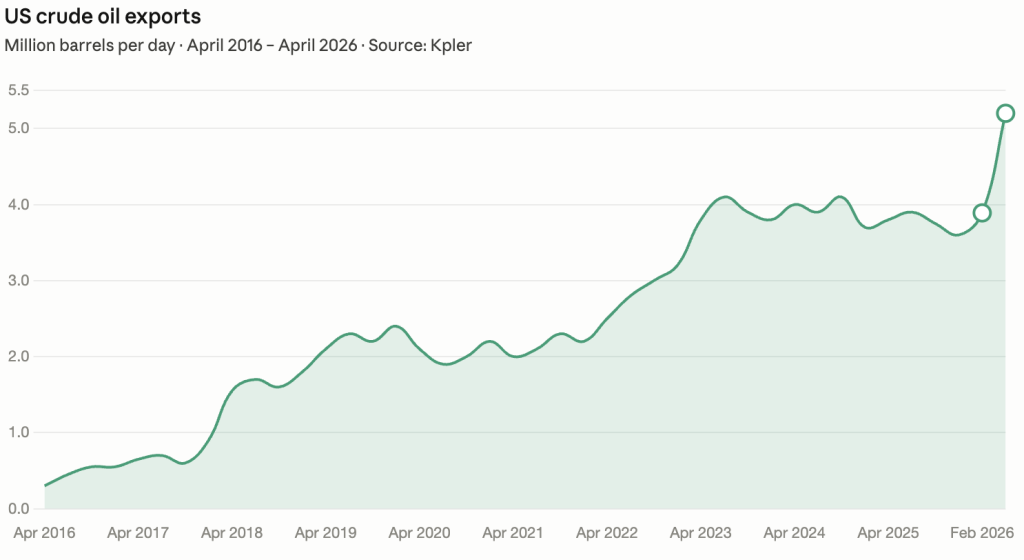
American oil and gas companies are recording revenue. According to the analytics platform Kpler, in April 2026, U.S. oil exports reached 5.2 million barrels per day — an all-time historical record. For comparison, the figure stood at just 3.89 million barrels in February. In the space of two months, the increase exceeded 1.3 million barrels per day.
Double gain: volume and price
American companies won on two fronts simultaneously. First, the physical volume of deliveries surged sharply. The export increase of 1.3 million barrels per day, at prices of $90–100 per barrel, brought the industry approximately $110–120 million in additional daily revenue.
Second, the conflict itself drove oil prices higher. The geopolitical risk premium added $30–35 per barrel to market prices and this markup applies to the entire export volume, not just the incremental increase. The additional price effect is estimated at another $120–130 million per day.
The total cumulative gain for the American oil industry amounts to $230–250 million per day, or approximately $7 billion per month.
LNG: the second front of profits
The reorientation of the global gas market has been equally significant. Qatar, one of the world’s largest exporters of liquefied natural gas, found itself effectively cut off from its traditional buyers. Amid regional instability, European and Asian importers were forced to urgently seek alternatives. American LNG filled the void, again at prices significantly elevated due to the supply shortage. Thus, the conflict in the Persian Gulf simultaneously opened new markets for the United States and improved margins on already existing contracts.
The logic of war and the logic of the market
Regional conflicts in the Middle East have historically benefited producers located outside the zone of instability. The United States is today the world’s largest producer of oil and gas, and any disruption among competitors automatically strengthens their market position. Notably, the April export record was achieved without any emergency ramp-up in production: the American shale industry simply redirected flows that had previously supplied the domestic market or less lucrative destinations.
