



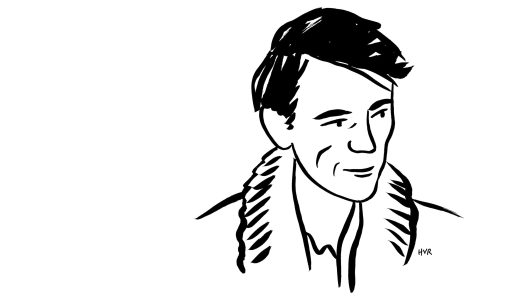
Barack Obama left the White House in 2017, but he remains to this day the main hope of his party. Why is the former president expected to actively take on Trump? The key points from a New Yorker piece.
Barack Obama remains one of the most popular American politicians, despite having left the White House more than nine years ago. A 2025 Gallup poll found that 96% of Democratic Party supporters view him favorably. Among all living U.S. presidents, he enjoys the highest approval rating, outpacing Bush Jr., Clinton, Trump, and Biden. Obama also ranked first in a poll by the conservative Institute for Family Studies on role models for men.
This popularity is partly explained by Americans’ disappointment with what is happening under Trump, and partly by the fact that the Democratic Party has still failed to produce a leader comparable to him in charisma. Many in the U.S. are nostalgic for his presidency and want him to more actively oppose the current administration. New Yorker journalist Peter Slevin traced how Obama’s views on the state of the country have evolved and how his career has developed since leaving office.
The Dream of a Park Bench
In the final days of his presidency, Obama frequently invoked the darkest chapters of American history in his public speeches: slavery, the Civil War, the Great Depression, the Jim Crow laws. His message was that democratic institutions would endure despite Trump’s radicalism. He said that Trump would repeal no more than 15% of the reforms passed under his administration, and worked to keep up the spirits of those around him, many of whom had fallen into despair after the 2016 election, organizing concerts and parties featuring Paul McCartney, Meryl Streep, George Clooney, and Oprah Winfrey.
At his final press conference as president, Obama said he wanted to “be quiet for a bit.” He planned to speak publicly only on matters of exceptional importance.
Right after Trump’s inauguration, Obama flew with his wife to the California resort of Palm Springs. He has said that during his presidency he often dreamed of sitting on a park bench with no one recognizing him. He now hoped to live out that dream, at least in part: sleeping in, reading, exercising, traveling. In March 2017, he signed a memoir deal worth $65 million, then co-founded a production company with Michelle and struck deals with Netflix, Spotify, and Amazon Audible. The family’s total income from all of these business ventures, according to Slevin, runs into the hundreds of millions of dollars.
“America Is on Fire and He’s Kitesurfing”
While Obama was resting and building his business empire, Trump was systematically dismantling his reforms: in healthcare, immigration policy, and environmental legislation. He withdrew from the Paris Climate Agreement, imposed a travel ban on citizens from several Muslim-majority countries, and launched a “zero tolerance” policy toward undocumented immigrants that separated families at the border.
The harder Trump pushed, the louder the criticism of his predecessor grew. When photos emerged of Obama kitesurfing on Richard Branson’s private island, comedian John Oliver quipped: “I’m glad he’s having a good time while America is on fire.” Journalists tracked his every move: his golf games, his trips on the yachts of David Geffen and Steven Spielberg, his high-priced speeches abroad. The criticism intensified after January 6, 2021, when Trump’s supporters stormed the Capitol. The reproaches continued after Trump’s return to the White House in 2025.
An Unprecedented Situation
Slevin notes that most former American presidents, after leaving office, either stepped back from politics or maintained warm relations with their successors. George Washington took up whiskey production, Thomas Jefferson founded a university, Jimmy Carter devoted himself to humanitarian causes and acknowledged that he had done more good after leaving office than during it. Lyndon Johnson called Eisenhower for advice after Kennedy’s assassination, and Clinton discussed Russia strategy with Nixon.
With Trump, none of that is possible. Since moving into the White House, he has never once called Obama, regularly insulting him and spreading conspiracy theories about him. He accused him of treason, published fake videos of his “arrest,” and this year posted a video depicting Obama and his wife as monkeys. The White House press office dismissed the racism accusations as “fake outrage.”
Disappointment and Skepticism
Many of Obama’s supporters have been disappointed by his silence. Congresswoman Pramila Jayapal said that throughout Trump’s first term she kept asking herself why Obama wasn’t responding: “Our country is falling apart and he’s filming something for Netflix and vacationing in Hawaii.” Entrepreneur Jack Kahn, a Democratic supporter, adds: “We barely see him. He should be telling people not to lose faith.”
Not everyone opposed to Trump, however, is convinced that rallying around Obama again is the answer. Senator Tina Smith of Minnesota is skeptical: “Is it realistic to imagine that Obama is going to lead us forward? People relate to him with nostalgia, but times have changed.”
“More Than I Would Like”
Obama himself rejects the accusations of inaction. He says that Trump’s aggressive measures force him to engage in politics “more than he would like.” Since leaving the presidency, he has not missed a single electoral cycle, traveling the country to promote young Democratic candidates, appearing in campaign ads, and organizing fundraisers.
Together with former Attorney General Eric Holder, he founded the National Democratic Redistricting Committee to combat Republican gerrymandering. When the governor of Texas, acting on Trump’s instructions, managed to create five new congressional districts favorable to Republicans, Obama backed a California redistricting bill designed to give Democrats an advantage in the 2026 House elections and a majority of Californians approved it.
Obama has not disappeared from the public sphere either. He makes a point of reaching younger audiences: meeting with bloggers whose combined followings number in the tens of millions, and sitting down with comedian and political commentator Hasan Minhaj — that video racked up more than 8.5 million views on YouTube. Barber Victor Fontanez cut his hair while interviewing him — the video drew over 24 million views on TikTok. At the same time, Obama deliberately limits his media presence so that each public appearance carries real weight.
In the spring of 2026, he visited a daycare center in the Bronx alongside New York City Mayor Zohran Mamdani, lending his support to the mayor’s initiative for free leisure and education for all children in the city.
A Central Figure
The fact that Trump’s opponents expect more from Obama says less about the former president than it does about the current state of the Democratic Party: since 2016, no leader of comparable popularity has emerged from its ranks. Obama is now 64 and continues to champion a new generation of Democrats.
Despite the radicalization of political divisions, he remains optimistic. At a gathering of young congressmembers newly elected to the House of Representatives, he assured them that there would be “a world after Trump.” And to those who see the current moment as the worst in American history, he offers this reminder: “Our parents, grandparents, and great-grandparents faced situations far more difficult than the one we’re in now. I say this not to lecture young people, but to free them from a sense of hopelessness.”
The New Yorker concludes: just as eighteen years ago, when Obama won his first presidential election, he remains in 2026 the central figure in American politics.
