


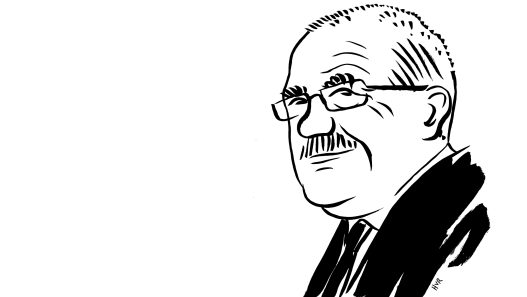

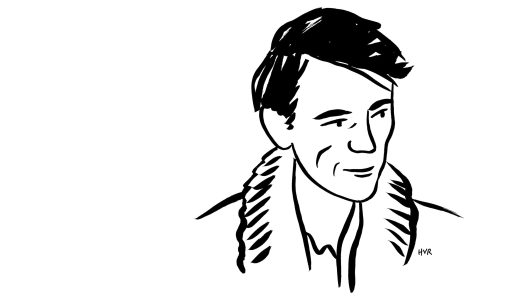
Two and a half years before the next U.S. presidential election, Donald Trump has begun thinking about who might become his political heir. According to The Wall Street Journal, in recent months the president has regularly asked advisers, friends, and major donors about the strengths and weaknesses of two figures from his inner circle: Vice President J.D. Vance and Secretary of State Marco Rubio.
When Trump won the presidential election for the second time in November 2024 and took office in January 2025, many observers noted that his team included supporters of two opposing strategies in foreign policy. On one side are the isolationists. They believe the United States should reduce its foreign policy activism, intervene less in overseas conflicts, and focus more on domestic problems. The main representative of this camp is Vice President J.D. Vance. On the other side are the “hawks,” who advocate a highly active foreign policy and do not rule out the use of force to defend American interests. The leading figure of this camp within the administration is Secretary of State Marco Rubio.
In practice, the foreign policy of Trump’s second term has turned out to be largely hawkish. During the first year of his administration, the United States entered into a dispute with the European Union over Greenland, carried out an operation against Venezuelan President Nicolás Maduro, and launched strikes against Iran twice: first in June 2025 and again in February 2026. In this context, Rubio, as head of American diplomacy, became one of the central figures in foreign policy and largely overshadowed Vance, who has focused more on domestic issues.
Trump himself acknowledged that “philosophical disagreements” existed between him and his vice president regarding the war with Iran. According to the president, Vance was “a little less enthusiastic” about the idea of carrying out the strikes, although he ultimately supported the administration’s decision. According to ABC News, the situation was more tense behind closed doors: Vance reportedly strongly opposed the attack and insisted that the United States should avoid new wars and concentrate on domestic priorities.
Meanwhile, Marco Rubio has been advancing his own foreign policy agenda. According to The Wall Street Journal, he has been discussing with Trump a strategy of pressure on Cuba that could potentially lead to the fall of the island’s communist regime. For Rubio, the son of Cuban immigrants, the issue carries particular significance.
Officially, Trump’s main political heir is still considered to be J.D. Vance. Polls show that he is more popular among conservative voters. He also enjoys strong support from part of the MAGA movement. Among his allies are Donald Trump Jr. and prominent conservative commentator Tucker Carlson. Erika Kirk, the widow of activist Charlie Kirk and now head of the influential organization Turning Point USA, has already publicly endorsed Vance as a future presidential candidate. The organization plans to use its network of regional activists to promote his candidacy during the primaries.
Vance has also been active in fundraising for the party. At one recent event in which he participated, about six million dollars were raised. Among the attendees were billionaire Jeff Yass, Palantir CEO Alex Karp, and ConocoPhillips CEO Ryan Lance.
At the same time, a camp supporting Rubio is also taking shape. He relies on influential politicians in Florida, the state he previously represented as a senator, as well as Republican politicians of Latin American descent and donors who supported him during his 2016 presidential campaign. Some pro-Republican Jewish organizations and major donors also lean toward Rubio. They are wary of Vance’s close ties with Tucker Carlson, who frequently criticizes Israeli policy and is a controversial figure for part of the American political establishment.
For now, both men are trying to maintain a public appearance of unity. According to The Wall Street Journal, they maintain friendly relations, and Rubio has privately said he has no intention of challenging the vice president. However, two camps are already beginning to form within the administration.
These differences are visible even in the government’s communication strategy regarding the war with Iran. According to Semafor, some officials believe authorities should warn Americans about possible terrorist attacks and cyber threats. Others argue that the level of danger should not be exaggerated in order to avoid creating panic.
The debate also surfaced after a shooting in Austin, Texas, on March 2, 2026. That day, Ndiagu Dian, a 53-year-old man originally from Senegal who obtained U.S. citizenship in 2013, opened fire on passersby, killing three people. The attacker was wearing a sweatshirt with the words “Property of Allah,” prompting speculation about a possible connection to the Middle East conflict.
Authorities, however, sought to avoid drawing conclusions too quickly. Law enforcement released very little information about the case. Donald Trump himself tried to calm concerns. In an interview with The Daily Wire, he said Americans should not worry about a rise in the terrorist threat within the country and described the attacker as “simply a madman.”
