



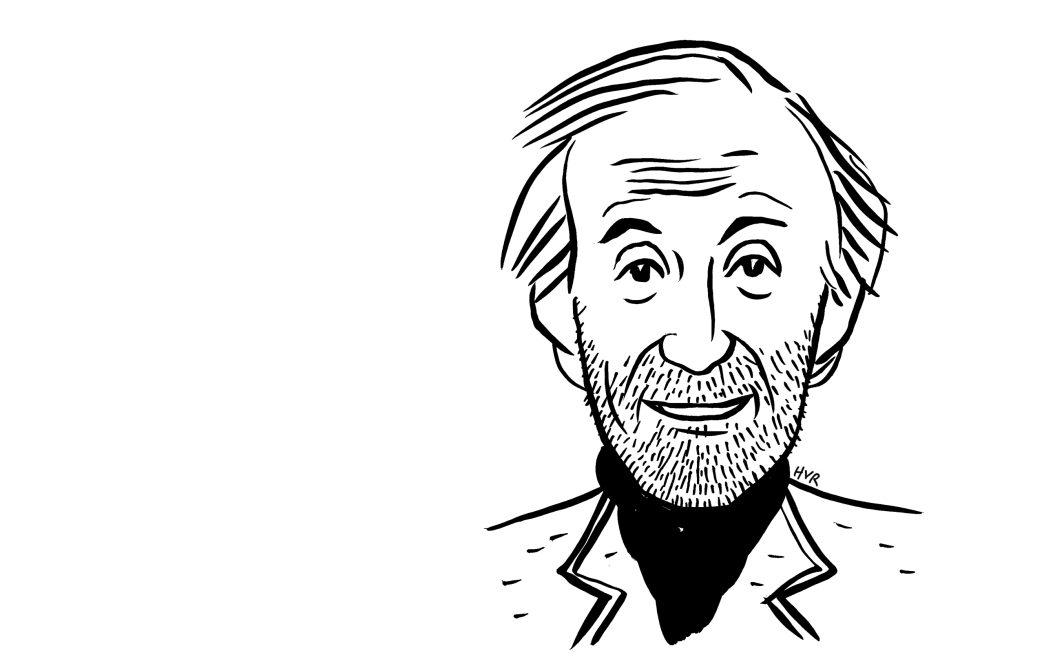
Vladimir Brovkin is an emeritus professor at Harvard University, specializing in Soviet history and the Russian Civil War. His work focuses on the political and social dynamics of regime change, state violence, and post-imperial transitions. He now draws on this research to try to account for developments in the international order and the war between Russia and Ukraine.
Guillaume de Sardes: The war in Ukraine has now been going on for more than four years. With the benefit of hindsight, how do you analyze it? Where do we stand in this war? Has it entered a phase of lasting stabilization, or do you think that shifts leading to a decisive military victory are still possible? Do you think a peace agreement could be signed this year, or will the conflict continue at least until 2027?
Vladimir Brovkin: To properly analyze this war, one must understand that Russia’s objectives have constantly evolved. The initial objective was to compel Ukraine to comply with the Minsk agreements. When Putin addressed the nation on February 24, 2022, he was absolutely clear. He said he had no intention of conquering or occupying Ukraine. The plan was simply to exert strong pressure on the Ukrainian government.
This objective had already been achieved by April. Russian troops were on the outskirts of Kyiv and Kharkiv; they had taken a large part of the two Donbas regions, as well as Kherson and Zaporizhzhia. Negotiations had taken place with the Ukrainians, and a protocol agreement had been signed in Istanbul. But Boris Johnson intervened and convinced Zelensky to continue the war, assuring him of Western support. The war then took a completely different direction, unfavorable to Russia.
For about a year, Russia, poorly prepared, suffered setbacks. One could say it was losing. This is important, because it gave the Ukrainians the impression that victory was possible. This period corresponds to the Russian setbacks of 2022. In 2023, Ukraine launched a major counteroffensive. It was at this point that all Western media claimed that Ukraine was in the process of winning. Zelensky traveled the world with his “victory plan.” What did this plan consist of? Breaking through to the Sea of Azov to cut Crimea off from Russia to the north, and blowing up the Kerch Bridge to cut it off from Russia to the east. Without supplies of water, food, and resources, maintaining it would have become extremely difficult, if not impossible. But this plan did not work. The Surovikin Line held; the Russians stopped Ukrainian soldiers, who did not even breach the first line of defense.
In 2024, the reorganized Russian army regained the initiative, which it has retained to this day. This is a very particular and difficult kind of offensive. Many wonder why the Russian advance is so slow. Some see this as a sign of Russian weakness. This is a mistaken interpretation. This slowness is explained by a profound transformation in the nature of warfare. The era of large armies and concentrations of tanks is over. Tanks have become almost useless; they are now used like artillery pieces. We have entered the era of drones. Military reports indicate that there are about ten drones in flight for every soldier. This makes any concentration of forces practically impossible, which is why the advance is so slow. Units move forward in small groups to avoid detection, penetrate targeted areas, secure strategic positions, and are then supported by drones and aviation. The idea is no longer to hold a continuous front line, but to gradually encircle localities, village by village, and advance slowly. This is what has been happening since the capture of Avdiivka in January 2024.
In 2024, Putin’s objectives evolved. He announced that the Russian conditions for peace now included four regions, in addition to Crimea, a neutral status for Ukraine, no NATO membership, as well as guarantees for the Russian language and the Russian Church. This has remained the official position to this day.
As for a peace agreement being signed this year, it would only be possible if the Ukrainians accepted all of these conditions. And I am certain that another demand would be put forward: the organization of free and fair elections in order to replace the Zelensky government. However, the way this could be implemented—even if it is not unfeasible—is not obvious. For now, the war seems set to continue.
In your view, could Russia’s territorial objectives still evolve? Professor John J. Mearsheimer, for example, argues that Russia might have an interest in taking Odesa and its region in order to cut Ukraine off from the Black Sea and turn it into a permanently dysfunctional state.
The signals coming from Moscow regarding Odesa are contradictory. Mr. Putin has never really stated clearly whether Russia will take Odesa or not. I think it is possible, but not inevitable. Everything depends on the type of government in power in Ukraine. If Zelensky remains, or if he is replaced by Zaluzhny or by a “Banderite,” then, most likely, the Russians will go as far as Odesa. In other words, the more the Ukrainian government is perceived as hostile, the more territory Russia will annex. Conversely, if there are free elections and a government favorable to Russia, it is not impossible that Odesa will remain Ukrainian.
I therefore see three possible scenarios. The first is the one I mentioned above and corresponds to current Russian demands (the four oblasts plus Crimea, a neutral status, the absence of NATO troops on Ukrainian territory, etc.). There would also need to be guarantees, which could be provided by the UN, by Chinese troops—who knows what else. But the Russians will demand guarantees that Ukrainian commitments will not be abandoned within a year.
The second scenario, which many Russians consider preferable, would be the complete collapse of the Zelensky regime. The different Ukrainian regions could then proclaim their independence and choose which direction to turn. Those wishing to remain with Ukraine would do so; those wishing to join Russia would do so, such as likely Odesa and Mykolaiv, and perhaps Kharkiv and Dnipropetrovsk. Because from what I hear in Odesa, the majority of the population is waiting for the arrival of the Russians. This is less certain for Kharkiv, where many Western Ukrainians have settled over the past ten years.
The third scenario would see Ukraine divided into three parts. Novorossiya, as a whole, would become Russian. Central Ukraine would become independent and friendly toward Russia, like Belarus. As for Western Ukraine, the Russians do not want it. They do not say so openly, but even if they could take it, they would not do so. It would be a separate state, of a “Banderite” type, as they say in Russia. The question of its possible accession to the European Union would remain open—perhaps yes, perhaps no—but it would certainly not be part of the “Russian world.” Ideally, from the Russian point of view, this state should not be a member of NATO nor become an outpost directed against Russia.
Some Russian analysts, such as Fyodor Lukyanov, have suggested that the war in Ukraine marks the end of the international order that emerged from the end of the Cold War. Do you share this view? Does the war seem to you to be a regional conflict, or a systemic turning point in international relations?
Three weeks ago, I would have answered yes, that it represents a systemic rupture of the postwar international order. But today, I no longer think so. I believe instead that the war in Iran has changed the situation and that nothing will return to the way it was before.
By comparison, the war in Ukraine does not constitute a rupture of the international order, because, strictly speaking, it’s a war linked to the collapse of the Soviet Union. It’s a kind of delayed reaction to that event.
When Ukraine, Russia, and Belarus left the Soviet Union, the idea—enshrined in particular in the Ukrainian Constitution of 1991—was to establish open borders, free movement of people and ideas, modeled on the European Union, as well as a non-aligned status. On this basis, Russia had accepted the principle: we will be independent, but we will remain close within the CIS. The model envisioned was, I insist, that of the European Union.
But starting with the “Orange” Revolution of 2004, Ukraine began to orient itself more toward the West. I think the European Union bears a large share of responsibility for the emergence of the conflict we see today, because in 2014 it was the Europeans who pushed Ukraine to become an associated member. Another policy would have been possible: to offer this status to both Ukraine and Russia. In other words, the Europeans chose to integrate Ukraine as an “anti-Russia.” The consequences were foreseeable, and many analysts had in fact foreseen them.
One must understand one thing: Russians see themselves as Europeans. They are neither Chinese nor Indian. Culturally, they are European. If one thinks of Europe in 1913, Saint Petersburg was on the same level as Vienna, Paris, London, or Berlin. It was one of the great cultural capitals of Europe, with Dostoevsky, Tchaikovsky, Chekhov, and many others, whose works are still performed today in European theaters. Thus, when Europeans asserted that Ukraine was Europe but that Russia was not, it was perceived as a real humiliation. For me, it is one. I was born in Saint Petersburg: what could be more European than that city? We have always considered ourselves European.
Political scientist Sergey Karaganov argues that the conflict should be understood as an existential confrontation between Russia and the West. In your view, to what extent does this interpretation now dominate Russian strategic circles?
When European officials, or Ukrainians supported by Europeans, assert that Russia should be divided into five provinces, and Kaja Kallas continues to say so—which is astonishing for an official position, since she represents not only Estonia but the European Union—then Sergey Karaganov is right: this is indeed an existential conflict. However, I do not think this has any chance of happening. Russia is a superpower. It probably has the most powerful army in the world today. It has a national cohesion that stretches from Belarus to Vladivostok. Counting on its disintegration is unrealistic.
As for the circles in Russia that share Karaganov’s view and are strongly hostile to the West, the issue is very complex. There are Russians who deeply hate the West, to the point of saying, like Vladimir Solovyov, that nuclear weapons should be used. However, I do not think they are truly serious about this. It is rhetoric. I do think, however, that they are serious when they call for symmetrical responses. For example, when they say that if it is proven that the British or the French provided intelligence to strike Bryansk, then Russia should destroy an equivalent target in England or France, such as a factory producing Storm Shadow missiles. Another example: after a Russian tanker was seized by the French, a Russian general recommended on television sinking the French patrol vessel responsible, in order to teach France a lesson. This type of hard response to hostile actions is supported by many people, notably on Solovyov’s programs, as well as by many generals. The military is particularly hostile to what it calls the “sponsors of the Kyiv regime.”
Fortunately, I do not believe that Putin or any serious Russian government would act in this way, as it would amount to a declaration of war.
At the opposite end of the most radical currents, there are figures such as Kirill Dmitriev and many businessmen. They continue to work with Europeans. They believe the problem lies with governments, not with their European partners. They hope for a return to normality and a resumption of economic relations.
The Russian population as a whole lies between these two positions. It is very sensitive to attacks on Russian infrastructure, particularly in Bryansk or Belgorod, where residents directly suffer the consequences. But I would not say that the population is hostile to the West as a whole. No, not in general. Hostility is directed rather at leaders such as Emmanuel Macron, Keir Starmer, Friedrich Merz, or Kaja Kallas—that is, the European governing elites—and not at the West as a whole, nor even at specific countries.
In an interview on March 14, 2026, with the Belgian daily L’Écho, Belgian Prime Minister Bart De Wever stated: “We must normalize relations with Russia and regain access to cheap energy.” Unsurprisingly, this statement was received coldly by his European colleagues. Do you think that once the war is over, relations between the European Union and Russia can resume, or are we heading toward a lasting division of the continent?
What Mr. Bart De Wever said is nothing new. The European Union has no energy resources of its own, and it cannot change that. Russia is an indispensable and natural partner, because of geography and the way things have developed historically. One cannot replace Russia with Qatar or the United States without additional costs. Everything that comes from the United States is more expensive. Their economic model is based on high margins. There are also other factors: labor, extraction, and transportation costs.
In this sense, De Wever merely expressed a reality. He is not the only one aware of it. A few years ago, Marine Le Pen expressed similar views. Today, there are many clear-sighted and reasonable people in Europe, particularly in business circles, who remain silent but wish to return to normal relations with Russia. I believe that these are the people on whom Vladimir Putin is counting.
More generally, I think that, despite the war, Russians remain rather well disposed toward Europeans. If the war ends, relations could normalize within a few years. For despite all the efforts to reorient toward China, which is an important and respected partner, Russians remain fundamentally European. I therefore do not believe that we are heading toward a permanent division of the continent. Much will of course depend on how the war ends and on the type of agreement that is concluded. But if there is a genuine settlement of the conflict, relations could gradually resume.
The cost of the war for both Ukraine and Russia is very high, and this is true from multiple perspectives: demographic, economic, political, and so on. How do you think these two countries will be able to live side by side in the future? What kind of future do you envision for Russia?
That is a very good question, because the situation will not be simple. Regarding human losses, I recently consulted official data: Russian losses probably amount to around 200,000 people, to which must be added a very large number of wounded. This is a considerable figure, and it is a major problem, because for those who have lost loved ones, the pain will be deep and long-lasting. But on the other hand, there is a very large number of mixed Russian-Ukrainian families, millions of people sharing a common identity. These people are culturally Russian while being originally from Ukraine, or Ukrainian while living in Russia. Everything is deeply intertwined.
If I think that relations will eventually normalize within a few years, it is based on the experience of the Russian Civil War: people fought each other, they killed one another, and yet the country was later reunified, and its inhabitants continued to live together. Thus, despite bitterness and suffering, I think that over time relations between Russians and Ukrainians will calm down.
On the economic level, I do not see a catastrophe for Russia. The current slowdown results from a deliberate decision by the Russian Central Bank to contain inflation. Inflation is now under control, but growth remains weak; the objective is therefore now to revive growth, and official targets have been revised upward. The reorientation toward China has worked. What Europeans do not always understand is that after 500 years of dominance, they are no longer the center of the world. From now on, there is practically nothing that Russia needs that it cannot obtain from China. This includes cutting-edge technologies—semiconductors, robotics, AI—all of which are available in China, sometimes at a higher quality than what Western countries produce. In this context, I am overall very optimistic about Russia’s economic future.
Russia’s main challenge, like that of Europe as well, is demographic. The Russian population is not growing, which constitutes a major problem. Nevertheless, I am more optimistic about Russia than about Europe, whose demography is in decline. My optimism is based on the fact that migrants arriving in Russia mainly come from former Soviet republics. They come from the same cultural space and are accustomed to ways of functioning similar to those in Russia. When they come to work in Moscow, their adaptation is much easier than that of Syrian migrants in Germany or Pakistani migrants in the United Kingdom. Thus, in terms of integration, Russia is in a relatively favorable position. Millions of Uzbeks, Kazakhs, Tajiks, and other populations could, in the long term, represent a very significant share of the population. The ethnic composition of the country will evolve, but this will not be a problem. Russia will remain a “Russian world,” because it is not ethnicity that matters. As Vladimir Putin said, being Russian is above all about loving Russia.
Ultimately, I think that Russia will come through this. It may change, including on the ethnic level, but culturally and economically it will continue to strengthen over time.
