


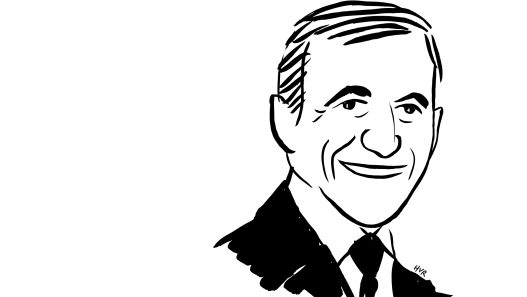
The son of Iran’s last shah, Reza Pahlavi, has lived in exile for nearly half a century. Over that time, he has been a “shah without a throne,” a marginal symbol of nostalgia for pre-revolutionary Iran, a human rights advocate, a regular at Western conferences and, finally, a figure whose name is once again being heard inside the country.
From heir to exile
Reza Pahlavi was born in 1960, at a time when his father’s power, Mohammad Reza Pahlavi, had already been secured by the 1953 coup d’état and direct support from the United States and the United Kingdom. Formally, Iran remained a monarchy; in practice, it was an authoritarian state. Economic modernization went hand in hand with rising repression, growing social inequality, and the loss of political sovereignty.
In August 1978, Reza was sent to the United States to continue his studies. He never returned to his homeland. In January 1979, the shah left Iran; in February Ruhollah Khomeini returned from exile; and in the spring a referendum enshrined the creation of the Islamic Republic.
The “shah in exile”
After his father’s death in 1980, Pahlavi formally proclaimed himself Shah Reza II. The early years of exile were marked by plots, contacts with Iran’s regional adversaries, and attempts to organize a coup. However, by the mid-1980s it had become clear that the clerical regime was firmly entrenched and that a return to power by force was impossible. This realization marked a turning point in his political evolution.
By the late 1980s, Reza Pahlavi had settled permanently in the United States and began to change his rhetoric. He stopped presenting the restoration of the monarchy as a goal and instead promoted ideas more broadly acceptable in the West: human rights, a secular state, and democracy. His circle no longer consisted solely of monarchists, but also included former opponents of the shah’s regime who had left Iran after the revolution.
In 2013, Pahlavi sought to institutionalize this approach by creating the National Council of Iran, a coalition of the opposition in exile. Its platform was deliberately broad: territorial integrity, separation of religion and state, equal rights for citizens, and the right of the people to determine the form of government themselves. For a long time, this structure remained a matter for the diaspora. Inside Iran, Pahlavi was seen as a figure of the past, more closely associated with the émigré milieu of Los Angeles than with real politics.
Why the situation has changed
The protests at the end of 2025 highlighted a central problem of the Iranian opposition: the absence of a recognized center and a clear plan for “the day after.” Discontent exists, as do street demonstrations, but there is no mechanism for transition. In this context, Pahlavi emerged as a convenient figure precisely because he has a ready-made scenario. Opposition television channels, social media activity, and support from Israel and Gulf countries have made him more visible. In January 2026, his calls for protests coincided with a sharp escalation of street mobilization, and his meetings in the United States showed that Washington was once again beginning to view him as a possible interlocutor.
What he proposes
Pahlavi insists on one point: he does not intend to govern Iran. His model is based on a transitional administration, the organization of elections to a constituent assembly, and the transfer of power to elected institutions. Formally, he opposes the monarchy as a predetermined solution and proposes submitting the question of the form of government to a popular decision.
