


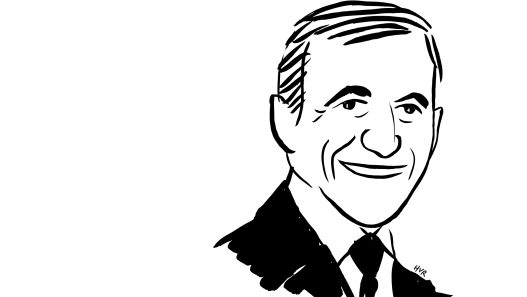

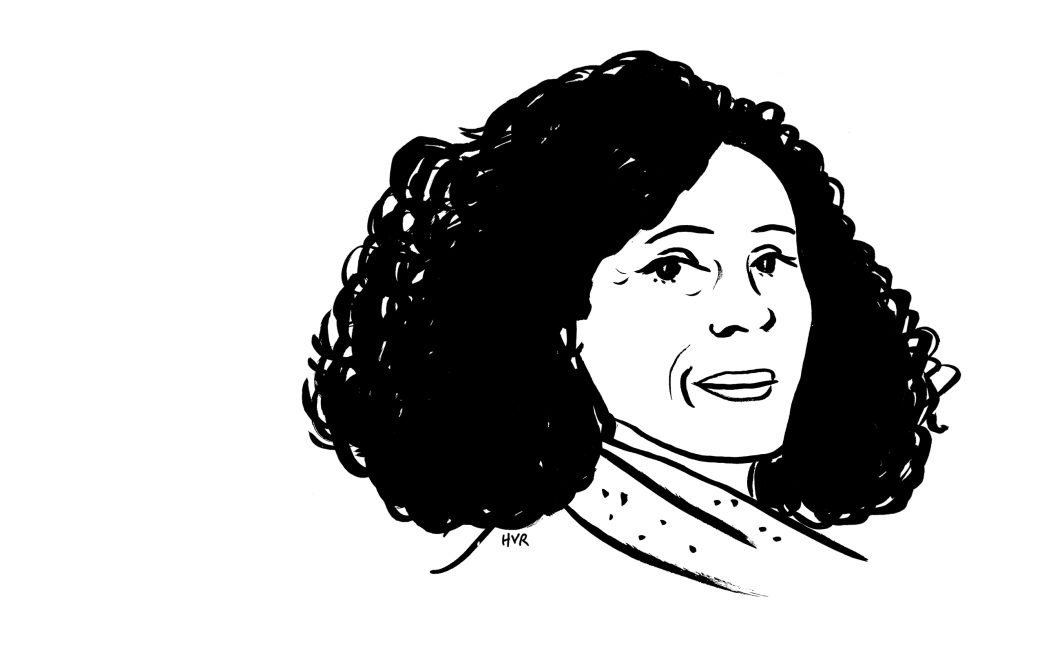
Sylvie Bermann was French Ambassador to Beijing (2011), London (2014) and Moscow (2017). Author of several essays, she is currently Chair of the Board of Directors of IHEDN.
Guillaume de Sardes: As French Ambassador to Beijing and then Moscow, you are very familiar with the economic and political relations between China and Russia. You have just written an essay L’Ours et le Dragon (Tallandier), which places them in historical perspective. In particular, you point out that the Chinese Communist Party (CCP) was founded in 1921 in Shanghai under the guidance of two delegates from the Comintern. While the Soviet Union disappeared in 1991, the CCP continues – seemingly unperturbed – to govern China. Since Deng Xiaoping, however, the party has insisted on the Sinicisation of Marxism. The CCP Charter, revised in 2022, even refers to ‘Chinese-style socialism for a new era’. What remains of Marxist thought within the CCP today? Which features do you consider to be specifically Chinese ?
Sylvie Bermann: The Chinese Communist Party is above all a Leninist party designed to seize and retain power. It has been rather successful in this regard. China is clearly a party-state or a state-party, the two being indistinguishable. Marxist rhetoric, already sinicised by Mao, much to Stalin’s irritation, has given way to a pragmatic dialectic inspired by Deng Xiaoping. The latter had put it colourfully: ‘It doesn’t matter whether a cat is black or white, as long as it catches mice.’ The definition of the regime (which had taken the form of an oxymoron: ‘market socialism with Chinese characteristics’) is now, as you point out, that of ‘Chinese-style socialism for a new era’. The term ‘with Chinese characteristics’ allows for all the freedoms and developments decided by the Party. The strength of Chinese civilisation has always been the Sinicisation of invaders and ideas. Moreover, there is no longer any question of communism, even if the name of the CCP, which was once debated, has been retained for historical reasons. Paradoxically, this Chinese-style socialism is also a form of state capitalism, with the Party Secretary General acting as CEO of China Inc. I asked a Russian businessman, who believed that the Soviet era was not as negative as people said, what he would do today if the Soviet Union were still in place. He replied that he would follow the Chinese example. In his view, the Chinese had been smarter than the Russians because they had retained the Party structure while allowing capitalist development…
In your essay, you point out that since Boris Yeltsin’s first trip to China in 1992, followed by the signing in 1996 of a ‘strategic partnership of equality and mutual trust for the 21st century’, ties between Russia and China have continued to strengthen, becoming a ‘friendship without limits’. However, you qualify this rapprochement by explaining that it is primarily geopolitical and that the Russian and Chinese populations feel nothing but indifference towards each other. According to you, the Chinese ‘no longer learn the Russian language’, while the Russians, ‘who feel deeply European, see no point in learning Mandarin’. Do you think this situation will change, particularly as a result of sanctions that cut off all forms of exchange (tourism, academic, scientific, technological, economic, etc.) between Europe and Russia?
The existence of a common enemy, the United States, led to this rapprochement and the expression of this ‘unlimited friendship’ – or ‘steel friendship’ – by virtue of an intangible adage in diplomacy: the enemy of my enemy is my friend… This was a strategic choice made by two autocratic presidents who are of the same generation, share an anti-Western worldview and want to establish a multipolar, de-dollarised world.
It is true that, until now, the populations remain wary, with the Chinese considering Russia to be an economic failure and the Russians claiming European culture. But things could change as a result of Moscow’s total break with Europe. The outbreak of war in Ukraine is forcing Russia into a global rapprochement with China: political, economic, military, but also scientific and cultural. During President Xi Jinping’s visit to Moscow on 9 May 2025 to commemorate the victory over Nazism, several agreements were signed in the cultural and educational fields between major institutions, notably providing for the reciprocal teaching of Chinese and Russian. Tourism is facilitated by the absence of visa procedures between the two countries. All of this will have consequences in the future.
After carefully analysing the various ties that bind China and Russia, you conclude: ‘The partnership is certainly unequal, but Russia is not a vassal state, as is often claimed in the Western media.’ How can we explain why this misconception of vassalisation has become so widespread that it is now commonplace?
There is a tendency to believe that an asymmetrical partnership necessarily leads to the weaker party becoming a vassal state. In reality, while everyone is aware of the balance of power, Vladimir Putin believes that China – unlike the West – does not threaten Russia’s identity. At no point has China imposed or sought to impose a change in policy on Russia, which would not comply anyway. Economic exchanges between the two neighbours have strengthened considerably, enabling Russia to offset the fall in oil and gas sales to Europe.
Beijing, for its part, is careful to show the utmost consideration for Russia. This is also a gamble on the future. In the event of intervention in Taiwan, China will expect Russia, also a permanent member of the UN Security Council, to show the same solidarity it has shown on the Ukrainian issue.
Finally, the supposed ‘invasion’ of the under-populated Russian Far East by the Chinese is a myth. Chinese people from northern China are put off by the harsh living conditions in this region. They are much more attracted to the south of their own country, particularly the island of Hainan.
Russia and China are both members of BRICS (founded in 2009) and the SCO (founded in 2001). Could you explain the role of these two organisations in the reconfiguration of the world?
These two organisations, competing with the Western G7, which has long claimed to be the world’s governing body, aim to assert the interests of what is conveniently referred to as the ‘Global South’. They reflect the emergence of a new multipolar world.
The BRICS (Brazil, Russia, India, China, South Africa), which became BRICS+ with the addition of five new members (Egypt, United Arab Emirates, Ethiopia, Indonesia, Iran), promote a world that is not subject to Western rules, protected in particular from extraterritorial sanctions by using the yuan for commercial transactions. New applications testify to the attractiveness of this forum, even if it remains quite heterogeneous. For several years now, the BRICS summits, whose initial objective was mainly economic, have been adopting political declarations. This club now represents more than half of the world’s population and 40% of global GDP. At the meeting in Kazan in October 2024, hosted by Vladimir Putin, a pariah in the Western world, the Russian press described the BRICS as the ‘global majority’.
The BRICS (Brazil, Russia, India, China, South Africa), which became BRICS+ with the addition of five new members (Egypt, United Arab Emirates, Ethiopia, Indonesia, Iran), promote a world that is not subject to Western rules, protected in particular from extraterritorial sanctions by using the yuan for commercial transactions. New applications testify to the attractiveness of this forum, even if it remains quite heterogeneous. For several years now, the BRICS summits, whose initial objective was mainly economic, have been adopting political declarations. This club now represents more than half of the world’s population and 40% of global GDP. At the meeting in Kazan in October 2024, hosted by Vladimir Putin, a pariah in the Western world, the Russian press described the BRICS as the ‘global majority’.
In your essay, you mention Russia’s long-standing ties with the Middle East, ties forged in particular by Arabic-speaking diplomats who were the successors of Yevgeny Primakov. You refer in particular to the ‘special relationship’ between the Kremlin and General Haftar. Could you tell us a little more about this?
Russian diplomacy has an excellent Middle East school. Arabic-speaking diplomats are effectively implementing a multi-pronged policy in this region, in the spirit of former Prime Minister and Foreign Minister Yevgeny Primakov. On the eve of the war in Ukraine, and following its support for Bashar Al-Assad’s regime, Moscow was even considered the ‘new Mecca of the Middle East’. Building on the ties developed during the Soviet era, Russia has forged inclusive relations with all the states and revolutionary, even terrorist, movements in the region. Russia condemned the violation by the Franco-British intervention force against Libya of UN Security Council Resolution 1973, which had authorised the establishment of a no-fly zone to prevent the massacre of civilians, but not regime change with the elimination of Gaddafi. Since the division of the country, Russia has chosen General Haftar, head of the Libyan National Army, who rules in the east of the country. It has developed military and strategic cooperation with him, initially through the Wagner militia. Since the ousting of Bashar Al-Assad in Syria and the vulnerability of the Tartus naval base, Libya has become a major foothold for Russia in the region. Moscow is therefore particularly interested in gaining access to the Tobruk base.
There is one country that you did not mention in your essay: the United Arab Emirates. Yet it has close ties with Russia. The UAE works alongside Russia within the BRICS and OPEC+. The two countries even describe each other as ‘strategic partners’. How would you assess their relationship? How do you think it will evolve?
Russia has effectively developed a strategic partnership with the United Arab Emirates in the areas of trade, energy and security. The UAE is now a member of BRICS+, the SCO and OPEC+. President Putin and his counterpart Mohamed bin Zayed meet regularly. The UAE has acted as a mediator to facilitate prisoner exchanges between Russia and the United States, as well as between Russia and Ukraine. In 2025, a bilateral investment treaty facilitating Russian companies’ access to the services, technology, transport and finance sectors in the UAE was signed, and it is estimated that trade between the two countries could double by 2030.
Finally, I would like to discuss a passage from your essay that surprised me. You state that ‘Vladimir Putin has always superbly ignored the economy’. Since he came to power, however, the Russian economy has developed and diversified to such an extent that it has risen from 11th to 4th place in the world in terms of purchasing power parity. Do you think this result is solely due to the fact that the Russian President has managed to stabilise the domestic situation, while the global hydrocarbon market was on the rise?
The 1990s following the collapse of the Soviet Union are considered humiliating years for Russia: a security jungle, a devastated economy with inflation reaching up to 2,500%, and an alcoholic leader who became the laughing stock of the world. Vladimir Putin restored stability and dignity to the country. He benefited from high hydrocarbon prices and a favourable economic climate. Although he brought the oligarchs to heel, he failed to carry out the structural reforms needed to transform a rentier economy dependent on hydrocarbons into a modern economy, like China’s, even though Soviet engineers and mathematicians were among the best in the world. After switching to a war economy, Russia certainly became the world’s fourth largest economy in terms of purchasing power parity, with a growth rate of over 4% in 2023 and 2024, but a sharp economic slowdown occurred in 2025 (high inflation and interest rates, overheating and labour shortages in the civilian economy). Russia’s success must therefore be viewed in perspective.
Vladimir Putin, obsessed with security and his desire for military domination, as well as his objectives in Ukraine, did not seize Donald Trump’s offer of rehabilitation on the international stage and economic partnership accompanied by the lifting of sanctions. He could have seized the opportunity and committed his country to an ambitious partnership with the United States. It was a missed opportunity. Vladimir Putin continues to prioritise geopolitics over economics.
