



Contemporary conflicts do not unfold solely on the battlefield. They also take place in the informational sphere, where narratives, perceptions of threat, and the political legitimacy of actors are constructed. The Russo-Ukrainian war illustrates this all too clearly: military confrontation is accompanied by a media battle over the interpretation of the conflict. Yet the way a conflict is narrated exerts a strong influence on the diplomatic options available.
Since 2022, the war between Ukraine and Russia has frequently been portrayed in Western political and media spaces as a struggle between Good and Evil. The same talking points are endlessly repeated: “war of aggression,” “unprovoked war,” “defense of the rules-based international order,” “defense of democracy,” “Russian imperialism,” and so forth. This simplistic politico-media framing reduces strategic complexity to a binary opposition. While it helps consolidate internal political unity, it has the consequence of hindering the dynamics of negotiation.
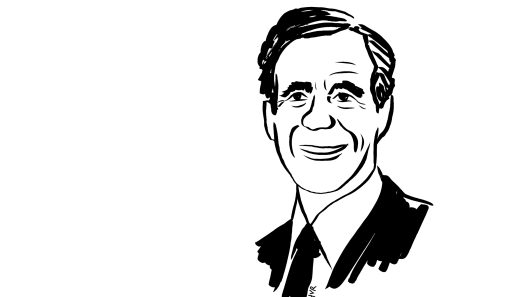
Realist theory in international relations reminds us that conflicts between great powers are embedded in logics of balance and threat perception rather than in absolute moral oppositions. Professor John Mearsheimer, in his analysis of the Ukrainian crisis, argues that NATO enlargement and the dynamic of encirclement perceived by Moscow constituted determining factors in the deterioration of relations between Russia and the West. In this offensive realist perspective, great powers seek to maximize their security within an anarchic system, which inevitably produces friction — and even armed conflict — when they perceive threats near their strategic borders. Without justifying the Russian position, this approach underscores that understanding a conflict requires taking into account the security perceptions of both sides. Yet the moralization of the conflict that we are witnessing tends to neutralize this analytical framework. If an actor is described exclusively as malevolent, irrational, or driven by limitless expansionist intentions, any reference to its security concerns becomes politically suspect.
Walter Lippmann’s reflections on the construction of public representations shed further light on this dynamic. In his seminal essay Public Opinion (1922), Lippmann explains that societies act not according to objective reality, but according to their perception of it. When public debate is structured around moral archetypes — hero and aggressor, victim and tyrant — these simplified images shape political preferences and narrow the space for compromise. A narrative opposing Good to Evil rigidifies positions by transforming a strategic conflict into a moral crusade, assimilating any concession to an ethical fault, thereby making compromise more difficult.
The history of international negotiations nevertheless suggests that prolonged conflicts are resolved sustainably only when the parties mutually recognize certain fundamental concerns. Diplomacy cannot rest solely on moral evaluation; it requires the identification of interests and the search for an acceptable balance among them.
If the objective is stabilization and the reduction of escalation risks between great powers, it becomes necessary to reintroduce an analytical reading attentive to power dynamics, threat perceptions, and the mechanisms of the security dilemma. As long as the Russo-Ukrainian conflict is presented as a struggle between Good and Evil, recognition of the adversary’s concerns will remain impossible — rendering negotiation itself impossible.
