



Residents of European countries are increasingly acknowledging that the sense of stability belongs to the past. According to a survey by FGS Global conducted in November among more than 11,000 people across 23 European Union countries, nearly two thirds of respondents believe that “Europe’s best years are behind it,” while 77% are convinced that the next generation will face a more difficult life. This was reported by Politico. We examine the dominant public moods in Europe today and what concerns its citizens most.
Distrust in Democracy and Disillusionment with Power
One of the main sources of concern for Europeans is the state of democracy. Seventy-six percent of survey participants said they believe democracy in their country is in decline. The most pessimistic assessments are particularly widespread in Western and Central Europe. Across all surveyed countries, more than 70% of respondents said they are entitled to expect more from their governments. At least half of those questioned believe that the existing political system “is failing the people and requires fundamental reform.” The highest levels of dissatisfaction were recorded in Romania (91%), Greece (88%), and Bulgaria (86%). In Scandinavian countries, assessments are noticeably more moderate, Politico notes.
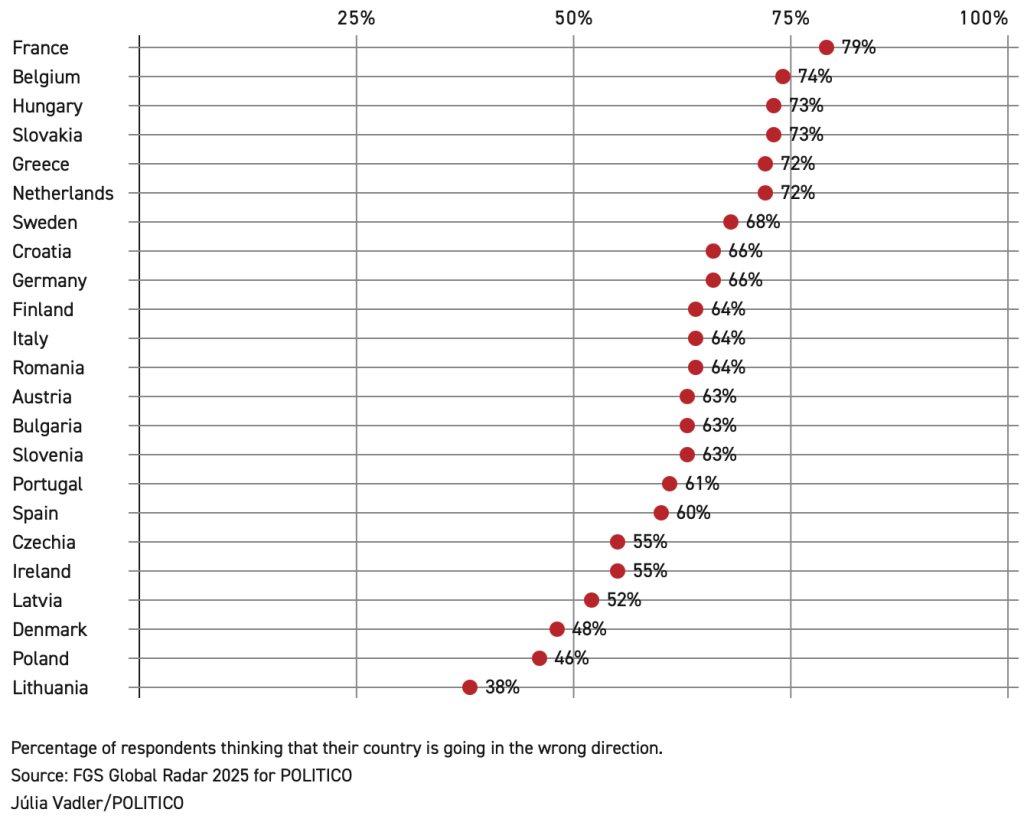
In addition, in the majority of EU countries, more than 50% of respondents believe their country is moving in the wrong direction. This view is least common in Lithuania (38%), Poland (46%), and Denmark (48%).
War, Security, and External Pressure
External factors have a strong influence on public sentiment. The war between Russia and Ukraine, which has been ongoing for several years, has reminded Europe that the era of guaranteed security is over. At the same time, tensions with the United States are growing, particularly in the context of the tough and unpredictable policies of U.S. President Donald Trump.
Politico points out that Lithuania and Poland, which border Russia, as well as Denmark, which is under pressure from the United States due to the status of Greenland, display lower levels of pessimism. In these countries, the sense of threat has long been part of political reality, and societies have adapted more quickly to the new conditions.
Outlook for the Future
Sixty-three percent of respondents said that their country’s best years are already behind it. At the same time, 77% believe that life for the next generation will be more difficult economically, socially, and in terms of security. Europeans are increasingly doubtful that their children will live better than they do. Politico notes that these results reflect a low level of trust in political systems and doubts about their ability to effectively respond to major challenges.
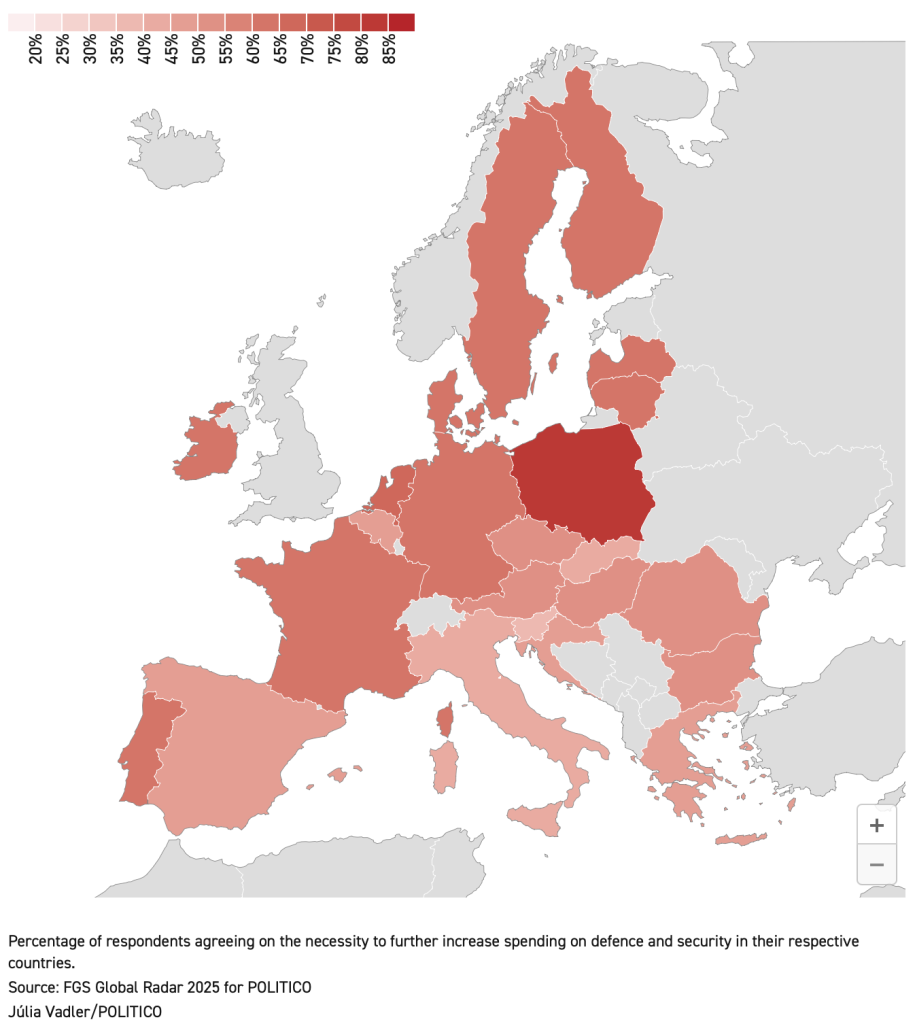
Against the backdrop of disillusionment with institutions, there is growing demand for more decisive action. Seventy-one percent of respondents believe their countries should defend their national interests more assertively, even if this leads to tensions with other states. A majority of survey participants also support higher defense spending: 57% favor increasing military budgets. In Poland, this figure reaches 82%, reflecting a high level of security-related concern.
Attitudes Toward Trump
The survey was conducted in November 2025, before a new round of tensions between Europe and the United States over Greenland. Nevertheless, attitudes toward Donald Trump in Europe were already predominantly negative at that time. About two thirds of respondents said they were pessimistic about the impact he could have in 2026 on the global economy (69%), international security (64%), and the situation in their own country (64%).
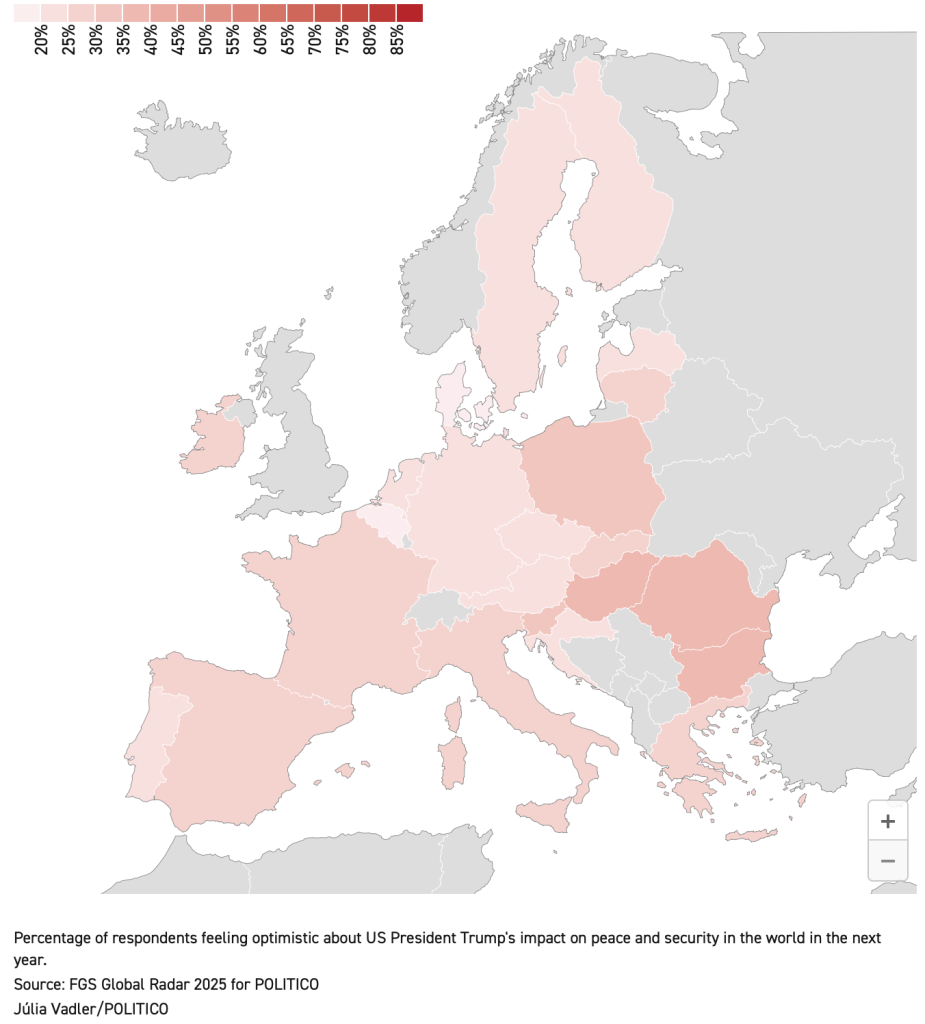
Even among supporters of right-wing populist parties, whom Trump considers his allies, he remains largely unpopular. Seventy-seven percent of respondents said they do not believe he deserves the Nobel Peace Prize.
