




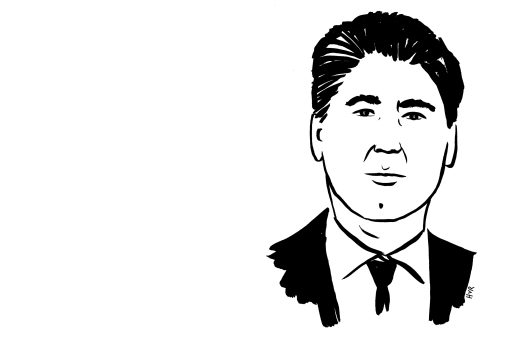
Murat Seitnepesov is an entrepreneur and philanthropist, founder of Integral Group, and initiator of the Caspian Week Forum and Greater Caspian Association, which promote the Greater Caspian Region and cooperation among its countries.
Maria Kuznetsova, Guillaume de Sardes: You present the Greater Caspian Association as a platform intended to give this region a strategic identity despite differences between countries. In your view, how can the Association help transform a geographical concept into an independent geoeconomic center?
Murat Seitnepesov: First, I would like to clarify what the Greater Caspian region actually encompasses, as it is often misunderstood.
The region comprises eighteen countries with a combined area exceeding 10 million square kilometers, a population of 650 million people, and a total GDP of approximately 8 trillion USD (at purchasing parity). This extends well beyond the five littoral states of the Caspian Sea—Russia, Azerbaijan, Iran, Turkmenistan, and Kazakhstan. It also includes allof Central Asia, Afghanistan, Pakistan, the two South Caucasus states (Georgia and Armenia), and the Black Sea countries (Turkey, Romania, Bulgaria, Ukraine, Moldova, and Belarus).
Across this vast region, diverse cultures and religions have coexisted for centuries, creating deep ties that persist today.Many countries share a common historical experience: they were part of the Soviet Union and retain Russian as a lingua franca. Where Russian is not predominant, Turkic languages prevail—Turkish, Azeri, Turkmen, Uzbek, Kazakh, Kyrgyz, and others—which are also spoken across several regions of Russia itself. Culturally, mentalities remain remarkably close: a person from Turkmenistan can readily understand a person from Kyrgyzstan, Russia, Ukraine, or Belarus.
The region possesses deep logistical interconnections with ancient roots. The oldest is the Great Silk Road, which China has revived under its Belt and Road Initiative (BRI) in 2013. Europe refers to the same concept as the East-Westcorridor (TRACECA project). For nearly 2,500 years, this corridor has traversed our region, connecting China to Europe. This is why the Greater Caspian Region logically encompasses both landlocked countries situated on this strategic route and countries with direct maritime access. Historical and cultural proximity suggest that even Mongolia could eventually be part of the Greater Caspian Region.
The Greater Caspian Association is a non-profit organization. We derive no income from it; rather, we invest our own resources and those of our partners. It is important to note that we do not have any executive power and cannot impose anything. However, we can make proposals and try to persuade. In today’s fragmented world, regional cooperation is becoming increasingly relevant. We are moving away from global approaches. Our role is to help countries recognize opportunities where they previously perceived only differences. Incrementally, this transforms the GreaterCaspian from an abstract concept into a geoeconomic reality.
Maria Kuznetsova, Guillaume de Sardes: You say your main mission is to promote and develop the Greater Caspian Region. What exactly do you mean by “development”: GDP growth, infrastructure projects, the creation of a unified logistical architecture, political integration, or all of these simultaneously?
Murat Seitnepesov: When we speak of “development,” we mean multiple dimensions operating in concert. The region can only progressthrough a systemic approach. Our work therefore pursues three principal objectives.
Our first objective is to establish the region’s prominence on the global stage. In our early years, when we organized the first Caspian Week Forum in Davos, the region was profoundly misunderstood. People associated it exclusivelywith oil and caviar— some could not even locate it on a map. Any development therefore begins with raising awareness among investors, policymakers, and other stakeholders. We endeavor to showcase the potential of thesecountries: their cultures, resources, and genuine economic opportunities.
Our second objective is to deepen interactions between politicians, businessmen, scientists, university professors, andcivil society. Recent developments are encouraging: several longstanding conflicts—between Azerbaijan and Armenia,between Tajikistan and Kyrgyzstan—have been resolved, opening unprecedented space for cooperation. This point cannot be overstated: without peace, security, and stability, development is impossible.
It is very important for our region to have a unified logistics infrastructure—what we call the “corridor mentality.” Developing a corridor requires each stakeholder to think beyond their own segment and consider the entire route. Onemay invest billions optimizing a single national segment, but if bottlenecks exist elsewhere in another country, the entire corridor fails. The whole is only as strong as its weakest link. This is why we advocate a genuinely regional approach.
The Association’s third objective is to catalyze innovation and facilitate cross-border projects. Innovation here means more than technology—it encompasses new institutional frameworks and collaborative mechanisms that enable countries to address shared challenges. The region possesses considerable untapped opportunities in digital infrastructure, renewable energy, logistics optimization, and advanced manufacturing. By convening entrepreneurs,policymakers, and researchers through platforms like Caspian Week Forum, we create environments where ideas can be incubated and scaled across markets. Concrete examples include blockchain solutions for supply chain transparency along the Middle Corridor and other Trans-Caspian coridors, regional environmental standards, and innovation hubs connecting startups with corporations and governments. These initiatives prove invaluable given our position as a critical junction for global trade.
Maria Kuznetsova, Guillaume de Sardes: Following the war between Russia and Ukraine, the United States and the European Union imposed a large number of sanctions. How have these measures changed the flow of goods transiting through the Caspian region? What role dosecondary sanctions, banking restrictions, and insurance risks play in this reorientation of flows?
Murat Seitnepesov: The sanctions have exerted profound indirect impacts on our region, despite our countries not being primary targets. Overnight, the Greater Caspian region transformed from an attractive destination for business and investment into a place perceived as “too proximate to conflict.” International banks, fearing secondary sanctions exposure, began operating with excessive caution. Many institutions grew suspicious of all transactions involving the region, closing accounts and severely restricting correspondent banking relationships. This created formidable obstacles to economic activity.
Injustices may have been committed: for examples, certain Russian nationals who fled mobilization and settled inCentral Asia or the Caucasus had their bank accounts frozen simply because they held Russian passports—despitepossessing no connection whatsoever to sanctions evasion. These collateral effects merit greater consideration in the design of sanctions policies.
Regarding flows themselves, sanctions have indeed redirected enormous volumes toward the Middle Corridor—the East-West routeconnecting China to Kazakhstan, Azerbaijan, Georgia, and Turkey. Transport volumes on this corridor have surged by 50 to 100 percent annually since the beginning of the war.
Multiple factors contributed: not only sanctions targeting Russia and Iran, but also instability in Afghanistan and thelogistical disruptions triggered by COVID-19. During the pandemic’s apex, to transport a single China-Europe container cost $15,000—a figure that abruptly rendered land corridors economically competitive.
However, the region remained unprepared for this surge. A pervasive lack of ‘corridor mentality’ persisted, coupled with critical bottlenecks in ports, railways, and transshipment facilities. When container rates subsequently normalized to $1,000-$1,500, the economic logic supporting lengthy land corridors evaporated. Consequently, the flow reorientations induced by war and sanctions remain temporary. Hence the importance of improving the underlying logistics infrastructure.
Secondary sanctions and compliance requirements have fostered an atmosphere of pervasive suspicion within financial systems. Foreign banks often assume a priori that any Central Asian nation sharing a border with Russia must becircumventing sanctions restrictions. This creates a compliance burden that slows investment, complicates payments, and partially isolates countries with genuine neutrality and no involvement in the conflict.
Insurance risks compound these challenges. As regulatory pressure on legitimate shipping intensifies, economic incentives shift toward clandestine fleets operating without insurance, inspection, or safety compliance. Environmental and financial risks escalate accordingly—a single maritime incident can inflict damages for the environement between 1 and 10 billion dollars.
Maria Kuznetsova, Guillaume de Sardes: The global oil market has been disrupted by Western sanctions (insurance restrictions, origin controls, financial limitations, etc.). Paradoxically, the states imposing these sanctions continue to access Russian oil indirectly, via third countries orcargo blending. Under these conditions, is a “clean,” fully transparent market even possible?
Murat Seitnepesov: This question touches upon the fundamental efficacy of sanctions themselves. John Bolton, former National SecurityAdvisor to President Trump, observed at a conference in 2022, shortly after the war commenced: “The sanctions are most effective on the day when they are announced.” The observation is apt: evasion efforts commence immediatelythereafter. Academic literature on sanctions—extensive and rigorous—reaches a consistent conclusion: sanctions prove relatively ineffective in achieving their stated objectives. We observe this reality daily.
Regarding oil markets specifically: from a purely technical standpoint, a fully transparent global market remains entirely feasible. Years ago, before COVID-19, we proposed a comprehensive methodology to trace crude oil from wellhead to end-user by introducing nano-additives at successive stages—extraction, refining, and distribution.Technologies have advanced substantially since then, and the approach would face minimal technical obstacles today, because artificial intelligence enables the management of vast datasets at affordable cost.
It is worth recalling that each crude oil already possesses distinct chemical characteristics— its own “DNA,” so tospeak. If there were a genuine intention to determine the origin, analytical methods would already be in place. Refined products have been dyed for differentiation across numerous countries for decades (yellow for diesel, red for gasoline, for example). These same methodologies could be applied to crude oil with far greater sophistication.
The fundamental obstacle therefore is not technological but political. Total transparency is achievable if political will exists. Yet many nations prefer the status quo of opacity. The pertinent question is not “Can we achieve a transparentmarket?” but rather “Do we genuinely desire one?”
Maria Kuznetsova, Guillaume de Sardes: In this case, can clandestine fleets, whether Russian or Iranian, be seen as self-regulating mechanisms in response to contradictory political signals?
Murat Seitnepesov: The existence of what journalists term “shadow fleets”—more accurately characterized as vessels operating outsideconventional regulatory frameworks—is inevitable. This is neither an invention of Iran or Russia, nor a peculiarity of the contemporary moment. It is simply the manifestation of economic logic.
British economist Thomas Joseph Dunning (1799-1873), a trade unionist and political economist, articulated thisprinciple with remarkable clarity in The Genesis of the Industrial Capitalist. His analysis merits full citation:
«Capital eschews no profit, or very small profit, just as Nature was formerly said to abhor a vacuum. With adequate profit, capital is very bold. A certain 10 percent will ensure its employment anywhere; 20 percent certain will produce eagerness; 50 percent, positive audacity; 100 percent will make it ready to trample on all human laws; 300 percent, and there is not a crime at which it will scruple, nor a risk it will not run, even to the chance of its owner being hanged. If turbulence and strife will bring a profit, it will freely encourage both.»
Dunning’s historical observation was prescient. More than a century and a half later, nothing has fundamentally changed.
Governments can sanction a thousand additional vessels, and markets will simply procure replacements. The substantive problem is that these unregulated vessels typically operate without insurance, without inspection protocols,without compliance with safety standards. The environmental and operational risks are enormous. The structural contradiction lies in adopting restrictive measures without systematically weighing downstream consequences.
Eliminating shadow fleets would demand a global institutional mechanism accepted—not imposed—by all participating nations. One might envision something analogous to a United Nations Security Council endowed with genuine enforcement authority. In today’s polarized geopolitical environment, such consensus appears unrealistic. Half the world formally condemns these practices; the other half derives substantial benefits from them in the shadows. As long as this fundamental division persists, regulatory arbitrage opportunities will materialize.
The emergence of clandestine fleets is therefore not merely predictable—it is structurally inevitable given currentincentive structures and institutional arrangements. Understanding this reality is the prerequisite for designing more effective policy responses.
