

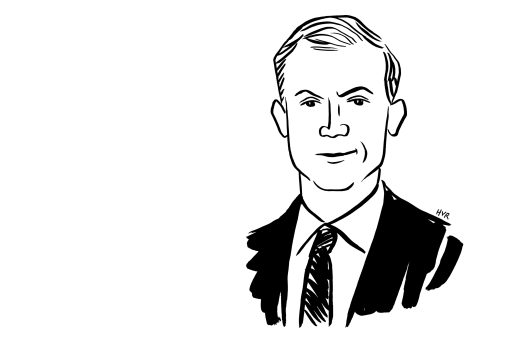
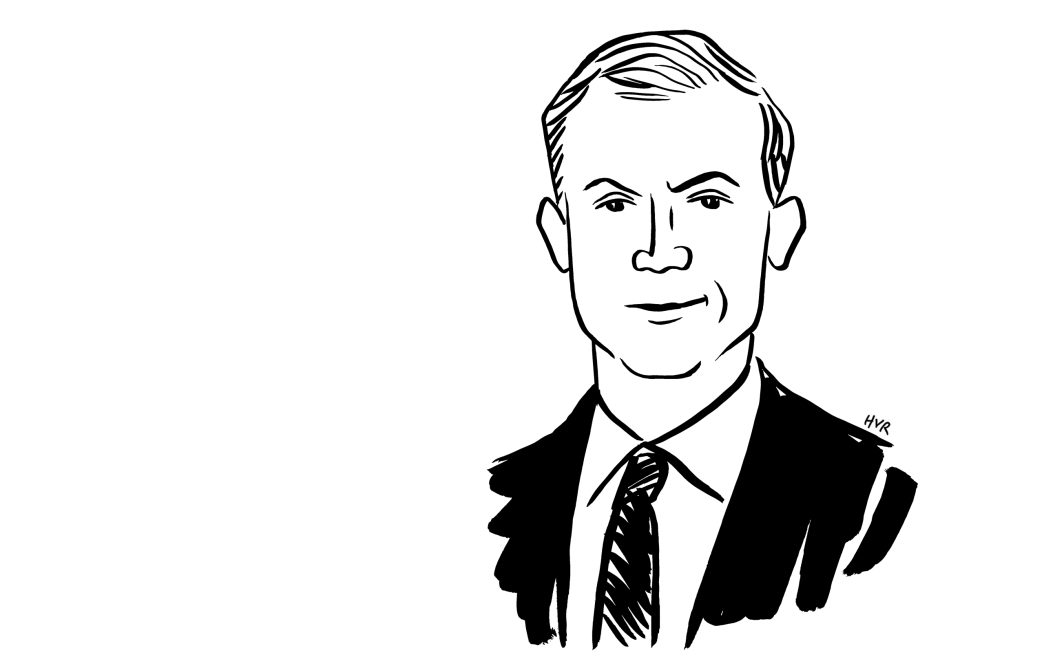
Maximilien Dechamps is a lawyer in the Paris office. A graduate of Sciences Po Strasbourg and holder of a Master’s degree in public law from the University of Strasbourg, he worked for the Strasbourg Administrative Court and at the Banque de France before joining the Paris-based law firm EQA Avocats.
In mid-December last year, as streets were lighting up and toy shops were gradually filling with eager children and tender-hearted parents, the Council of the European Union placed a very particular surprise under the Christmas tree between the Mercosur treaty and Bulgaria’s entry into the eurozone: for the first time, the sanctioning of two Europeans under the sanctions regime against Russia—Messrs. Jacques Baud and Xavier Moreau. Until then, the European legal offensive had focused on Russian figures and a handful of Ukrainians. In doing so, it now entered a new dimension: the ideological control of its own citizens. It must be acknowledged that after more than a decade of regular additions, the European sanctions framework may indeed have been yearning for renewal.
We often forget that the European Union did not wait for Russia’s invasion of Ukraine in February 2022 to pursue a sanctions policy linked to the Russo-Ukrainian geopolitical situation. The first salvo of restrictive measures was launched on 5 March 2014 and targeted only eighteen individuals… Ukrainian nationals, on the grounds that they were under investigation in their country for the misappropriation of public funds. Just two weeks later, in the wake of Crimea’s annexation by referendum, a second package of sanctions was adopted, this time aimed at Russian and Ukrainian figures, though still on a limited scale, as only twenty-one individuals were listed.
The list of Russian nationals naturally expanded with the outbreak of the “large-scale” war in 2022, using a commonly employed Ukrainian expression. Among the new additions was Dmitry Pumpyanskiy, Chairman of the Board of Directors of the pipeline company PJSC Pipe Metallurgical Company. He was sanctioned on the grounds that, in his capacity as a business leader, he operated in economic sectors that provide “a substantial source of revenue for the Russian government, responsible for the annexation of Crimea and the destabilisation of Ukraine.” The Council also noted that Dmitry Pumpyanskiy had met the Russian President on 24 February 2022 alongside other businessmen, which, in its view, demonstrated that he belonged “to Vladimir Putin’s closest circle” and therefore supported the war in Ukraine. It should be specified that Dmitry Pumpyanskiy was at that time taking part in a series of meetings, planned well in advance, between the Kremlin and the Russian Union of Industrialists and Entrepreneurs. He was invited in his capacity as president of the Yekaterinburg branch of the union, an element which, for the European institutions, demonstrated his position of importance within the Russian economy.
Indeed, within the “philosophy” of the EU sanctions system, the objective is not merely to sanction individuals directly linked to the situation in Ukraine, but more broadly to target major players in the Russian economy. It was on this basis that the Council of the European Union also placed Dmitry Pumpyanskiy’s wife, Ms Galina Pumpyanskaya, under restrictive measures, due to her presidency of the BT Sinara Foundation, one of Russia’s largest charitable organisations, which notably manages the philanthropic activities of PJSC — without, of course, failing to invoke her marital ties to her influential husband.
The family portrait was completed with the inclusion of Pumpyanskiy’s son, Alexander. The relative casualness of the reasoning may raise eyebrows, as it begins by essentially recalling that the individual is his father’s son. A little further on, the Council nevertheless takes care to note that Alexander was chairman and a member of the board of directors of the Sinara Group, an investment fund also run by Dmitry. Alexander, a resident of Geneva for some twenty years, a Swiss national since 2016, certainly a wealthy heir but employed by a Swiss company, living with his family and three children educated in Geneva, 2,600 kilometres from Moscow and the intrigues of the Kremlin, was thus relegated to the rank of collateral victim of this communitarian response to the invasion of March 2022.
Fortunately for the individual concerned, restrictive measures are imposed for a period of six months and, in principle, can only be renewed following a review procedure. However, the fact that Alexander Pumpyanskiy resigned from all positions held in his father’s companies on the very day the sanctions were adopted, 9 March 2022, did not prevent the Council from renewing his listing on the fateful register on 14 September 2022, then on 13 March 2023, and again on 13 September 2023, following a review process that was manifestly limited.
Dmitry and Alexander, father and son, determined not to passively endure this legal straitjacket, both challenged these decisions before the General Court of the European Union. Their actions were among the first brought against the restrictive measures adopted by the Council in 2022. Unsurprisingly, they were dismissed on 6 September 2023.
They tried again a few months later. And this time, on 29 November 2023, quite unexpectedly in view of the growing bellicosity of the EU authorities, the Court annulled the Council’s previous acts, on the grounds, as regards Alexander, that he no longer held the disputed positions. The Court rightly took care to specify that the sanctioning of individuals “independently of their personal conduct and solely on the basis of their family ties with persons associated with the leaders of the third country concerned must be regarded as running counter to the case-law of the Court.” It should also be noted that the Court even decided to annul the acts maintaining the sanctions against Dmitry on 26 June 2024.
One may imagine that Alexander, relieved, quite rightly considered the matter closed. Having resigned from his positions, now benefiting from a favourable judicial decision, with his allegedly culpable progenitor himself absolved, there was no reason for him to remain subject to sanctions in connection with a war for which he bore no responsibility whatsoever and in the absence of any position of influence in the Russian economy.
This, however, proved overly optimistic in light of the Council’s obstinacy. For, in an unprecedented move, despite the Court’s ruling, the Council of the European Union announced on 12 March 2024 the renewal of restrictive measures against Alexander Pumpyanskiy. Disregarding the Court’s case-law, acting in a discretionary manner and denying judicial review, the Council dared to override the verdict of the EU’s judicial authority.
One important clarification must nevertheless be made: as sanctioning decisions are renewed every six months, challenges to those decisions before the General Court of the European Union generally conclude only after the sanctions have already been renewed by a new decision. As a result, favourable judgments of the Court often concern decisions that have exhausted their effects and have already been replaced by new decisions of identical scope. Moreover, a favourable ruling by the Court does not prejudice the Council’s ability to re-list an individual: judicial decisions do not bind the European executive in its future decisions, even when based on the same grounds.
That said, in the present case, when the Council decided to renew the sanctions in March 2024, the Court had annulled the previous measures, on the merits, no less, more than three months earlier. It is not reasonably tenable for an executive authority to display such a degree of schizophrenia as to operate independently of judicial authority by issuing new decisions almost identical to those annulled by a court ruling.
This was followed by an implausible game of institutional ping-pong. On 12 September 2024, the Council of the European Union, once again defying the Court, renewed Alexander Pumpyanskiy’s listing, and did so again on 14 March 2025. On 2 April 2025, the Court annulled the acts of March and September 2024. On 12 September 2025, the Council renewed the listing yet again. Two days earlier, on 10 September 2025, the Court had annulled the maintenance acts of 12 September 2024 and 14 March 2025.
And throughout these judicial-bureaucratic rallies, it is Alexander who collects the balls: in addition to being subjected to a sanctions regime simply for having been born to the “wrong” father and becoming a collateral victim of an unprecedented mutiny in the history of the EU’s institutional framework, he is also sanctioned in Switzerland (under the “Ukraine Ordinance”), with the consequence of being deprived of employment, a mobile phone plan and a bank account in the country where his entire social and professional life has nevertheless been established for two decades.
One could conclude from this bleak story that the Council of the European Union is guilty of an authoritarian drift; that the European executive, obsessed with the idea of punishing Russia, ends up shedding a judicial subordination which, albeit very rarely in sanctions matters, sometimes forces it to retreat.
Such a conclusion would be well founded, but insufficient. For what the Alexander Pumpyanskiy case truly represents is the debacle of the communitarian ideal painted by the so-called “founding fathers” of European integration. The Preamble to the Maastricht Treaty of 7 February 1992 affirmed the signatories’ attachment to “the principles of liberty, democracy and respect for human rights and fundamental freedoms and the rule of law,” their desire “to strengthen the democratic nature and the efficiency of the functioning of the institutions,” and their ambition to create “an area of freedom, security and justice.”
It took less than thirty years for this lyrical, utopian manifesto to be fully consumed in the embers of reality and political intrigue. And to the series of scandals and compromises that need not be recalled here is now added this “Pumpyanskiy affair,” in which the European Union, claiming that it wishes to accede to the European Convention on Human Rights, tramples the right to a fair trial and to an effective remedy (Articles 6 and 13), the principle of legality of penalties (Article 7), and the right to respect for private and family life (Article 8) of a Swiss national who has provided every guarantee of good faith; in which the European Union, a political construction inherited from the Enlightenment, champion of democratic dialogue and collegiality, imposes geopolitical sanctions blindly; and in which the European Union, which was supposed to witness the triumph of the rule of law, violates the authority of its own judiciary.
“For power not to be abused, it must be arranged that power checks power,” Montesquieu wrote in The Spirit of the Laws, one of the theoretical and philosophical foundations of modern democratic constitutional organisation. And while Philippe Séguin warned in his famous speech of May 1992 of the unconstitutionality, under domestic law, of the ratification of the Maastricht Treaty, the Pumpyanskiy affair shows that today it is the European Union itself, as such and in light of its own founding texts, that is guilty of an equally disastrous drift.
