



According to Goldman Sachs estimates, the global economy has entered a new phase where China’s growth no longer drives global demand but slows down growth rates everywhere else. Whereas previously an additional percentage point of Chinese GDP increased global output by 0.2% due to growing imports, Beijing has now stopped increasing its purchases abroad. The PRC’s economic model has shifted towards exports, subsidised exports that are effectively driving out competitors in many areas. As a result, according to GS estimates, developed economies are losing 0.1-0.3 percentage points of growth for every percentage point of Chinese growth.
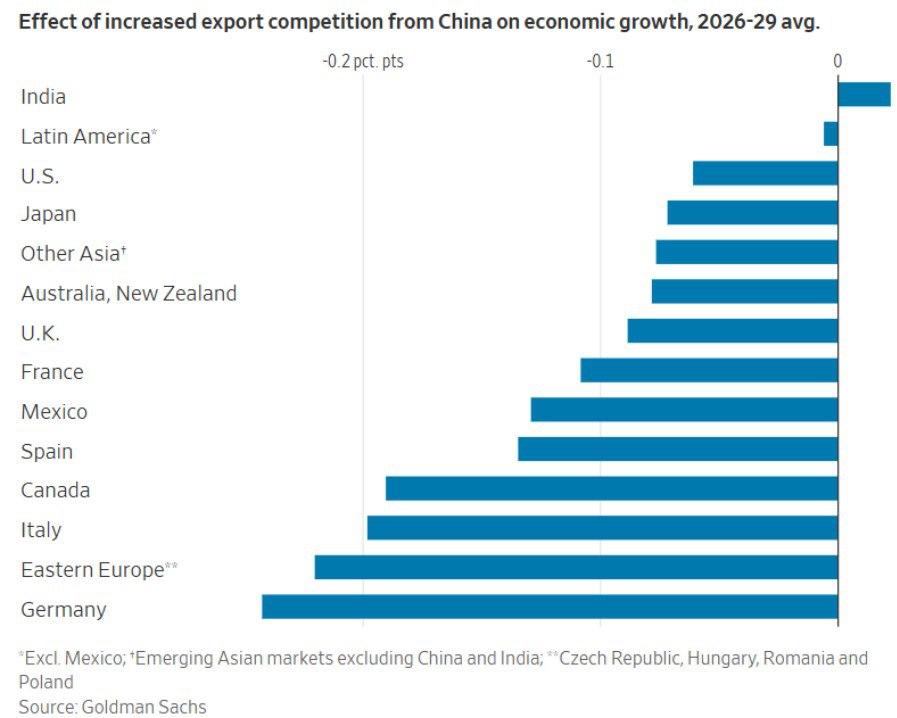
Over the past two decades, the world has become accustomed to viewing China as an engine of growth. Now the situation is reversed. When China accelerates, Germany, France, Japan, the United States, and with them the rest of the world slow down. In fact, the global economy is transforming from a system of mutual reinforcement into a system of redistribution. This situation is encouraging the US and the EU to build multi-level protection for their markets through tariffs, anti-dumping investigations, restrictions on public procurement, environmental standards requirements, plans to bring back industry, and direct subsidies.
All this points to the collapse of the previous model of globalisation, in which China was the economic ‘locomotive’ of the world. For this reason, it is natural to expect that developed countries will reduce imports of Chinese goods. The political will for this is already forming, and economic arguments only encourage further protectionism.
