


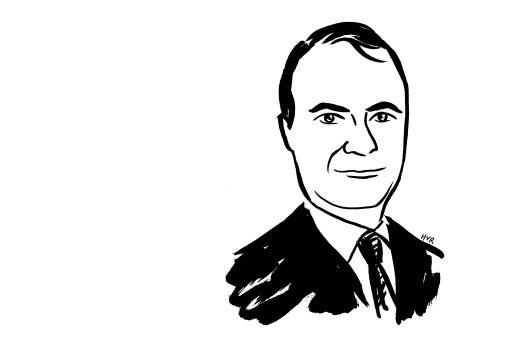
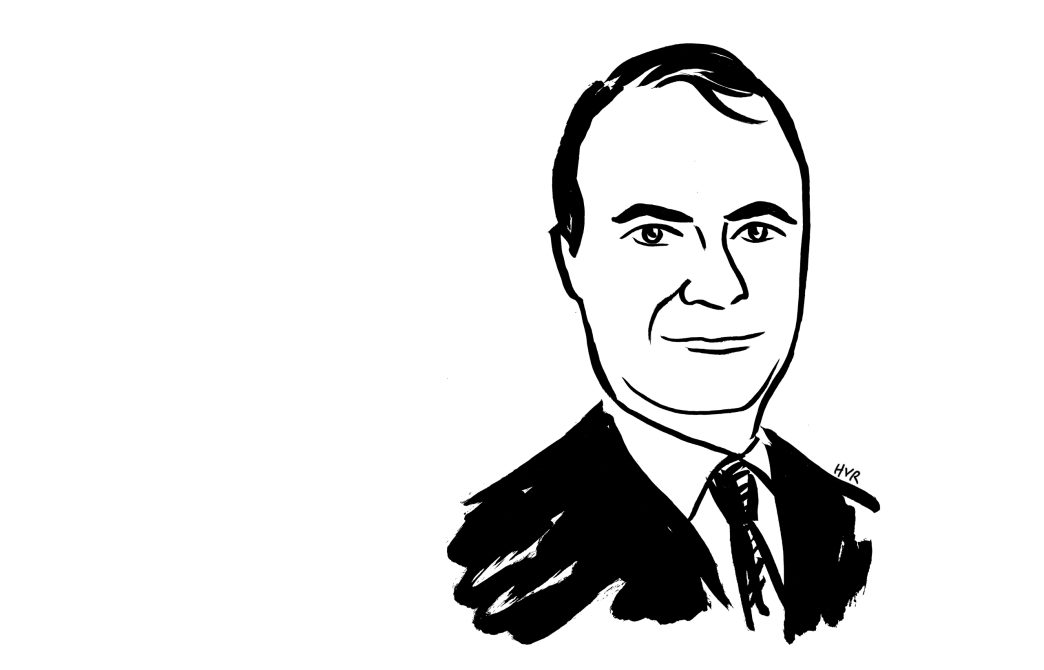
Nicolas Ramseier is a Swiss politician, former president of the PLR City of Geneva and former member of the political and diplomatic section of the Swiss Embassy in Belgrade. He now heads the Geneva Centre for Neutrality, where he promotes a modern conception of Swiss neutrality.
Maria Kuznetsova: Many of our readers associate Switzerland with neutrality, but few understand how this principle is translated into practice in institutions. Can you explain what the Geneva Centre for Neutrality (GCN) does? What is its mission, what tasks does it have and how does it transform neutrality from a concept into a practical tool?
Nicolas Ramseier: To begin with, it is important to note that Swiss neutrality was initially imposed from outside. According to some, its roots date back more than 400 years, to the defeat of Marignano in 1515 against France in northern Italy, which led the Confederation to renounce wars of expansion for the long term. For others, it dates back mainly to the Congress of Vienna in 1815, when the great powers wanted to create a buffer zone between France and the rest of Europe.
Over time, we have realised that it is also essential within the country, because Switzerland is home to several languages, religions and economic interests, which sometimes diverge. Neutrality has played an important role in limiting internal divisions, complementing federalism and political compromise. We saw this, for example, when the Swiss army prevented people from Ticino from crossing the border to support the uprisings in Milan, or during the deep tensions of the First World War between German-speaking elites and French-speaking populations. The press was also deeply polarised and the army itself divided, but neutrality provided common ground that helped to avoid a more serious political breakdown.
This principle then gave us diplomatic strength: numerous agreements signed in Geneva, the establishment of the United Nations, and the development of the Red Cross, whose neutrality is even stricter than that of the Swiss government.
Why the GCN? Because the world, and Europe with it, has changed profoundly in recent years. The Switzerland I found on my return after a few years abroad is now in turmoil and unsure of where it stands in its relationship with the European Union, NATO and other partners. I therefore wanted to create an open and democratic think tank to bring the major issues of our relations with the world, including of course neutrality, back to the centre of the debate, in order to reflect on its foundations and devise solid solutions for the decades to come.
We analyse neutrality in all its forms, not only political and diplomatic, but also economic and digital, because we believe that we can only be neutral if we maintain a certain level of independence and sovereignty. On this point, I like to give the example of Lebanon. Lebanon could fully benefit from a neutral stance, but it is unable to do so because it finds itself systematically crushed between several internal forces, which are themselves dependent on foreign actors who exert a decisive influence on the country.
And this is partly what Switzerland experienced during the First World War. German-speaking generals tended to be pro-Germany, while French-speaking generals were more pro-France. To remain neutral, it is therefore necessary to maintain a sufficient level of independence and genuine sovereignty. And this also applies to the field of technology. That is why we have defined a line of thinking dedicated to digital technology.
Our mission is therefore also to transform neutrality into a practical tool for Switzerland’s future.
How has your professional background (engineer/EPFL graduate, banking and private sector, work in the Swiss Foreign Affairs Department, municipal politics in Geneva) shaped your view of neutrality? Which aspects of this experience have proved important for the GCN?
I had never really wondered whether my background influenced my view of neutrality, but the answer is obviously yes. My scientific degree taught me to lay things out clearly, analyse them and look for solutions, and this approach naturally feeds into the idea of creating a think tank dedicated to neutrality.
Having travelled extensively and lived abroad also played a role. I have always had a deep curiosity about other cultures, the idea that there are many ways of seeing the world and that you have to listen before judging. This is very compatible with neutrality: staying true to your values while seeking to understand others.
My time at the Federal Department of Foreign Affairs further reinforced this conviction. The neutrality and trust associated with Switzerland’s name open doors. In the Balkans, I was able to talk to Serbs, Croats, Bosnians and Kosovars alike and be heard by all. This is a real advantage in diplomatic work.
Finally, my banking experience has shown me how important trust is. A large part of Swiss finance is based on cross-border management, and this is only possible if you inspire trust. All of this has obviously shaped my interest in neutrality and explains why I am now working on this issue within the GCN.
You say that neutrality can be represented as a three-floor building: legal neutrality according to the Hague Convention; the perception of neutrality, i.e. how other states see and interpret your position; and finally, total neutrality. And for Switzerland, as you point out, ‘the real challenge lies on the second floor: perception and trust’. If the legal basis is enshrined in international law and total isolation is impossible for Switzerland, what concrete instruments are available to manage the perception of neutrality precisely?
You’ve touched on the key point here. All the advantages of neutrality – our diplomatic role, our ability to forge special economic ties, the trust placed in us – rely heavily on perception. The legal basis is solidly guaranteed, and total isolation would not only be impossible but catastrophic for Switzerland, which is heavily dependent on foreign trade. In my opinion, everything hinges on reputation and trust.
This is precisely where the difficulties arise. In 2022, the partial resumption of sanctions was perceived as a rupture, particularly by Russia, but also by part of the Asian world. This reaction is understandable. In our case, Switzerland found itself in an extremely difficult situation. According to rumours circulating in Bern, the European and American governments were considering sanctioning large Swiss companies if we did not follow them in imposing sanctions. The Federal Council therefore found itself with its back against the wall. What I regret most is the lack of public debate here, given that Switzerland has always dealt with major issues in a transparent manner. If this pressure had been real, the country could have understood. If it was not, this poses a much more serious democratic problem.
Perception also depends on our own behaviour abroad. We cannot, on the one hand, want to host a meeting between the American and Russian presidents and, on the other, go to Kiev to make very public statements alongside the Ukrainian president. On a human level, it is clear that we stand in solidarity with the Ukrainian people, who are suffering terribly from this war, and our humanitarian efforts and actions must be present but discreet. War remains the most tragic expression of the human condition. Nevertheless, if we want to remain a credible mediator and offer our good offices, we must be careful not to align ourselves too openly with either side.
Despite everything, I see one positive aspect. In private discussions, many foreign politicians and diplomats, including those from Russia, China and India, understand the difficult position Switzerland finds itself in and continue to consider us a reliable partner. This shows that our expertise and neutrality have not been destroyed, but must be actively preserved in a consistent and transparent manner.
You mentioned that in 2022 Switzerland joined some of the sanctions, which is interpreted as a ‘deviation’ from its neutrality. Where do you draw the red line when it comes to participating in sanctions regimes so as not to destroy the ‘level of perception’?
I prefer to avoid talking about a ‘red line’ in the strict sense. In international politics, when a leader sets a red line and it is crossed, either he must intervene, which can be serious, or he loses his credibility. Switzerland’s credibility is based primarily on long-standing objective factors. We have never waged offensive warfare, we systematically respect international law, we are involved in humanitarian aid and we have a recognised tradition of good offices. It is this image that must be preserved.
If I had to define my own limit, I would say this: remain as neutral, impartial and respected as possible as long as our vital interests are not directly threatened. And I would add one essential point: the more diverse Switzerland’s economic partners are, the more independent and sovereign it is. If our relations are balanced between Europe, the United States, the Middle East, Africa, Asia and South America, it becomes much more difficult for anyone to impose behaviour or sanctions on us. Neutrality is also protected by this diversification.
Today, the world is actually returning to the logic of blocs. Neutral countries find themselves in a situation where they have no choice. In your opinion, can a state really afford, in the 21st century, not to ally itself with any bloc?
I hope that countries will still be able to remain outside of blocs, because the logic of blocs is inherently confrontational. History shows that when two blocs come into contact, either geographically or in terms of their interests, it almost always leads to conflict, and the first victims are the people. Today, we can clearly see this polarisation: Europe is being called upon to take a stand against China, Russia and China are moving closer to Iran and North Korea, and there is the questionable emergence of the concept of the Global South, which nevertheless brings together very different countries.
It is true that there are fewer and fewer neutral states: Finland and Sweden have joined NATO, Austria is debating its future, and in Switzerland the question remains open. Being neutral now requires much more courage and, above all, a certain level of independence.
I do not know whether neutrality will survive, but I am convinced that it remains indispensable. Neutral countries act as buffer zones, places for dialogue, a bit like the cartilage between bones. Without them, friction becomes shock. Perhaps there will be fewer of them, but their usefulness will not disappear.
